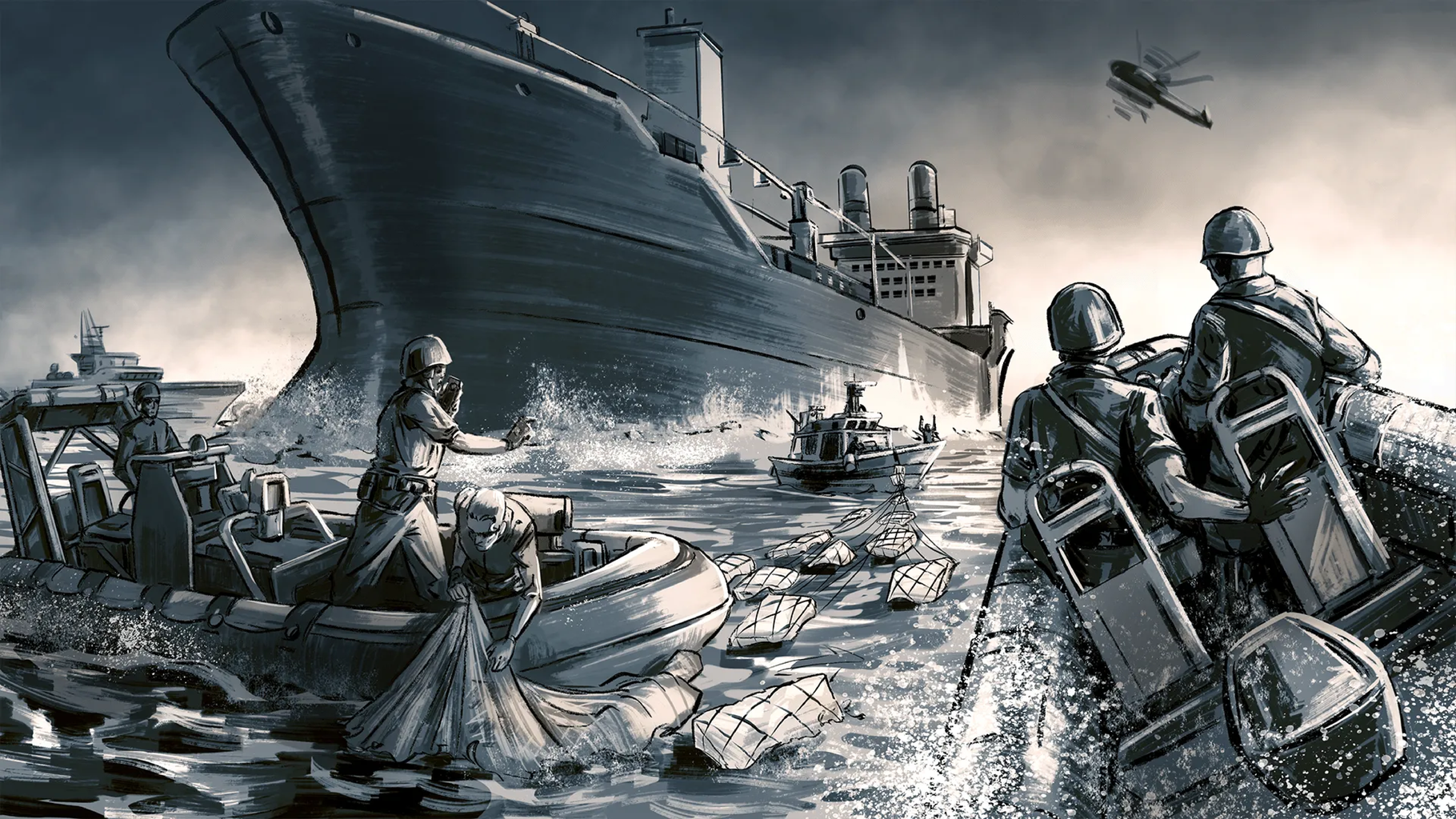
It is pitch dark in the international waters south of Capo Passero, in the Strait of Sicily. The only light comes from the deck of the Plutus, a 150-tonne cargo ship which has been crawling at a snail’s pace across the sea for the past hour.
A group of sailors have been busy on deck in that time, strapping together polystyrene packets, wrapping them in nets and attaching floats. Once the makeshift raft is assembled, they cut the line. It drops into the sea. With the job done, the captain gives the order to leave. The Plutus sets out for Turkey.
At night on the open sea, it is impossible to see other ships with the naked eye, even those very close by. As the Plutus departs, captain and crew are convinced they have carried out their work undetected.
But just 200 metres away, a Guardia di Finanza patrol boat has been lying in wait. While 19.000 feet above, an infrared camera on a spy plane keeps an eye on the whole scene. The target is not only the Plutus, but also an Italian fishing boat that is on its way to recover the cargo the sailors dropped overboard: 5.3 tonnes of cocaine loaded in the Caribbean.
Sure enough, at 11 p.m., a fishing vessel, the Ferdinando d'Aragona, appears on the horizon, its tracking system switched off. The five-person crew is unaware that they are being watched. They begin the task of retrieving the cargo. The sea is calm, but the operation is complicated for the small boat. It takes three hours to pull aboard all 188 packages.
The Ferdinando d'Aragona and its crew turn around and head back towards eastern Sicily.
“We wait for them to return to national waters and then we board them,” Major Alessandro Bongiorno, the commander of the Goa, the anti-drug task force in Palermo and coordinator of the investigation, told IrpiMedia.
“In the meantime, another patrol boat sets off in pursuit of the cargo ship, the Plutus,” said Bongiorno. “As soon as we are close, we contact them via the emergency radio channels, but the ship does not respond to either light or sound signals. Total silence. They ignore us and continue sailing.”
The situation is tense.
“In these cases, you don't know what you'll find if you board the ship. It can be very dangerous,” Bongiorno said. There may be weapons on board, and you never know how the crew will react.”
By now, it is eight o'clock in the morning and the light is in their favour. Colonel Alessandro Bucci, the commander of the Aeronaval unit of the Guardia di Finanza (GdF) in Palermo, gives the order to board the ship. The scene is like a pirate movie, with the GdF throwing ladders to the side of the Plutus and pulling themselves aboard.
The Ukrainian captain of the Plutus surrenders without resistance and immediately falls silent. But police believe they have irrefutable proof: aerial footage showing the ship’s crew tossing suspected illicit cargo into the sea. This is enough to force the Plutus to reverse course and follow the Italian patrol boat to the port of Termini Imerese.
Meanwhile, things are getting complicated on the fishing boat. “At first inspection, my men cannot find the packages loaded from the sea,” said Bongiorno. “Yet they had to be there. We had seen them being loaded. Only after many hours of searching did the captain himself tell us where to find them: they were hidden in the bulkhead. That's how five tonnes of pure cocaine came to light.”
The raids on the Plutus and and the Ferdinando d'Aragona on 19 July two years ago was the first time that Italian authorities seized cocaine trafficked by a system known as the “drop off,” an increasingly popular method of drug smuggling where large cargo ships deposit floating parcels of contraband into the sea for small fishing vessels to collect and transport to land.
At either end of these cocaine trades sit Latin American cartels and European mafia groups. But by tracing the vessels involved in the mid-sea transfers, IrpiMedia and The Black Sea uncovered a crucial third actor: a Turkish trafficking operation run by convicted smuggler Urfi Çetinkaya, who died in a Turkish prison last year, months into a 24-year sentence.
Known as "Turkey’s Escobar," after the Colombian king of cocaine, Pablo Escobar, Çetinkaya built a logistical force that has become central to Mediterranean drug routes. Using criminal complaints, tracking data, and shipping records, IrpiMedia has been able to reconstruct part of this Çetinkaya network. Some of the identified ships have already been detained, with their cargo seized and their crews arrested. Others, while not confirmed by criminal evidence, are considered suspicious for several reasons.
They share the same owners and routes as vessels found to have trafficked cocaine. They also exhibit similar behaviours along these routes. Their Automatic Identification Systems, mandatory for cargo ships over 100 tonnes, are routinely switched off at known loading and drop-off zones in the Caribbean, West Africa and the coasts of Europe and the Mediterranean.
All of the ships and owners can be traced to Turkish nationals, albeit hidden behind shell companies registered in tax havens, particularly in the Marshall Islands. This group represents a new kind of international criminal alliance, one in which, for the first time, Turks play a leading role.
RELATED STORY
Küresel kokain ticaretinin merkezinde Türkler var
Son yıllarda Akdeniz'e “drop-off” yöntemiyle bırakılan tonlarca kokain, Türk mafyası ile Kolombiyalılar, Arnavutlar ve İtalyanlar arasında ortaya çıkan yeni bir ticari ittifakın varlığını ortaya koyuyor.
Cecilia Anesi, Zeynep Şentek | 24 July 2025The drop-off phenomenon
This drop-off system is not new. Traffickers employed the tactic in the past, with poor results. But since 2022, they have begun to perfect the method. It has since become enormously effective and a key element in the global cocaine trade.
The most common route involves cargo ships, usually bulk carriers, loaded with blocks of high-purity cocaine from ports around the Caribbean. They sail eastward across the Atlantic into the Mediterranean, to Turkey, the Black Sea and other places around the Middle East.
Once they arrive, sailors “drop” the cargo at a point predetermined by the criminal organisations, which then recovers it with smaller boats to conceal the operation under the guise of fishing.
Here’s how the new Mediterranean drop-off system works.
Let's take it step by step.
Procurement
The cocaine is produced in Colombia and transported to the Caribbean, mostly using the waterways between Colombia and Venezuela.
The Load
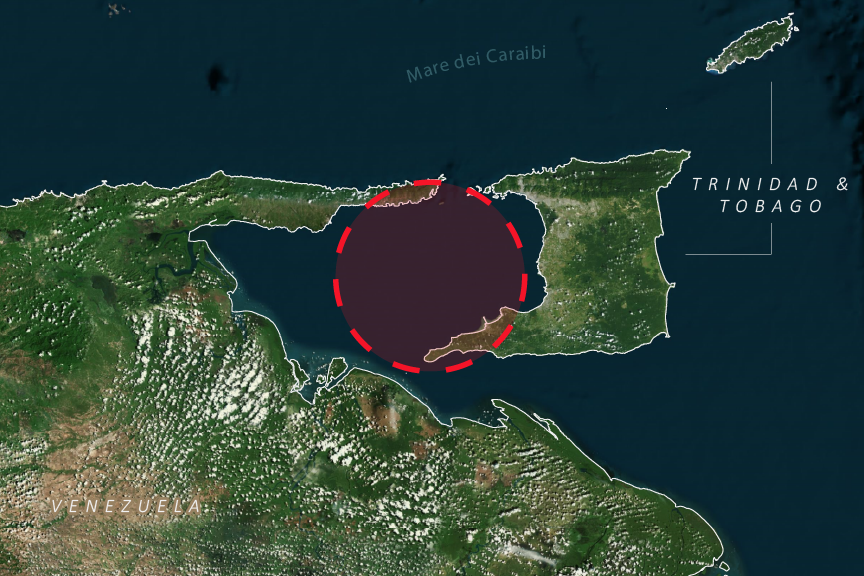
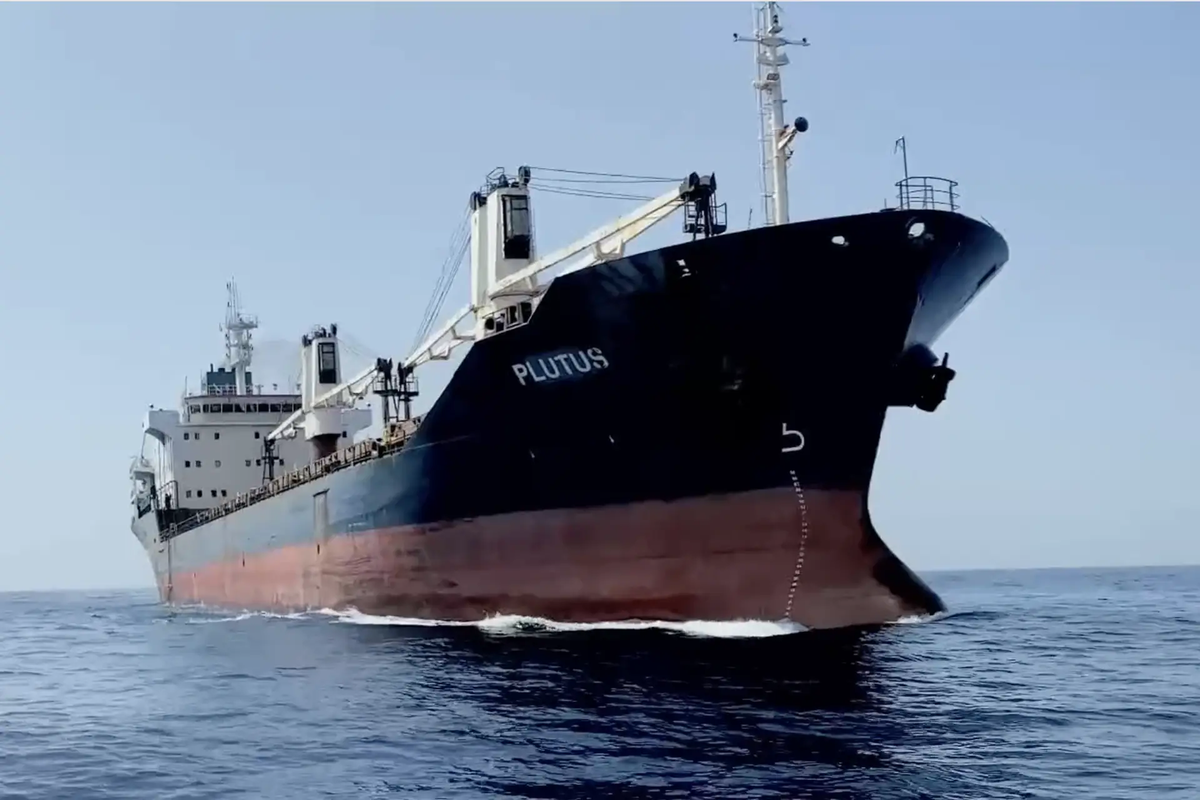
After stopping at the port of Sucre in Venezuela, the Plutus sails to Trinidad and Tobago, anchoring off the west coast of the island. There, in deep waters, armed men load five tons of cocaine onto the Plutus.
The Crossing
The Plutus crosses the Atlantic, heading toward the Canary Islands, then enters the Mediterranean, stopping south of Capo Passero.
The Drop-Off and Recovery
Some crew members aboard the Plutus throw five tons of cocaine into the sea using floating nets. The Plutus then resumes its journey toward Turkey.

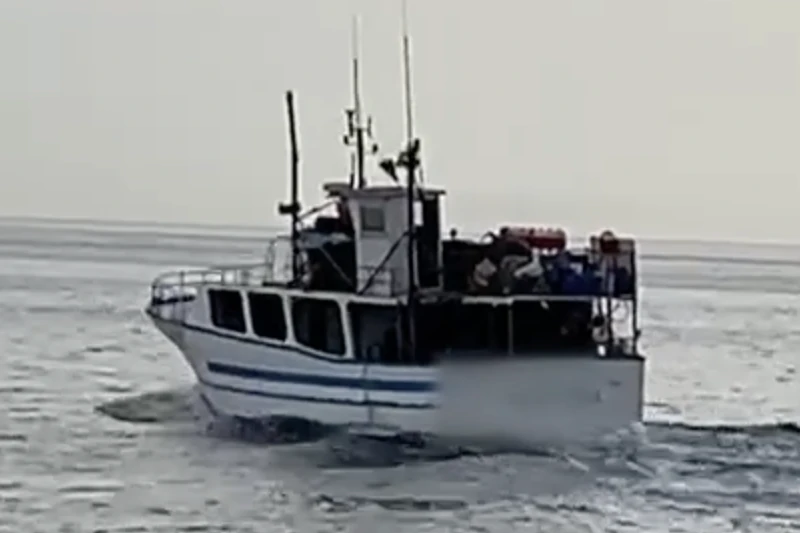
A fishing boat from Bagnara Calabra, the Ferdinando d’Aragona, equipped for swordfish fishing, sails outside Italian territorial waters to recover the cocaine dropped by the Plutus.
Boarding and Seizures
The Palermo Naval Air Command of the Financial Police (Roan), which had been monitoring the drop-off by aircraft and patrol boats, stops the Ferdinando d’Aragona. Only after many hours is the drug found.
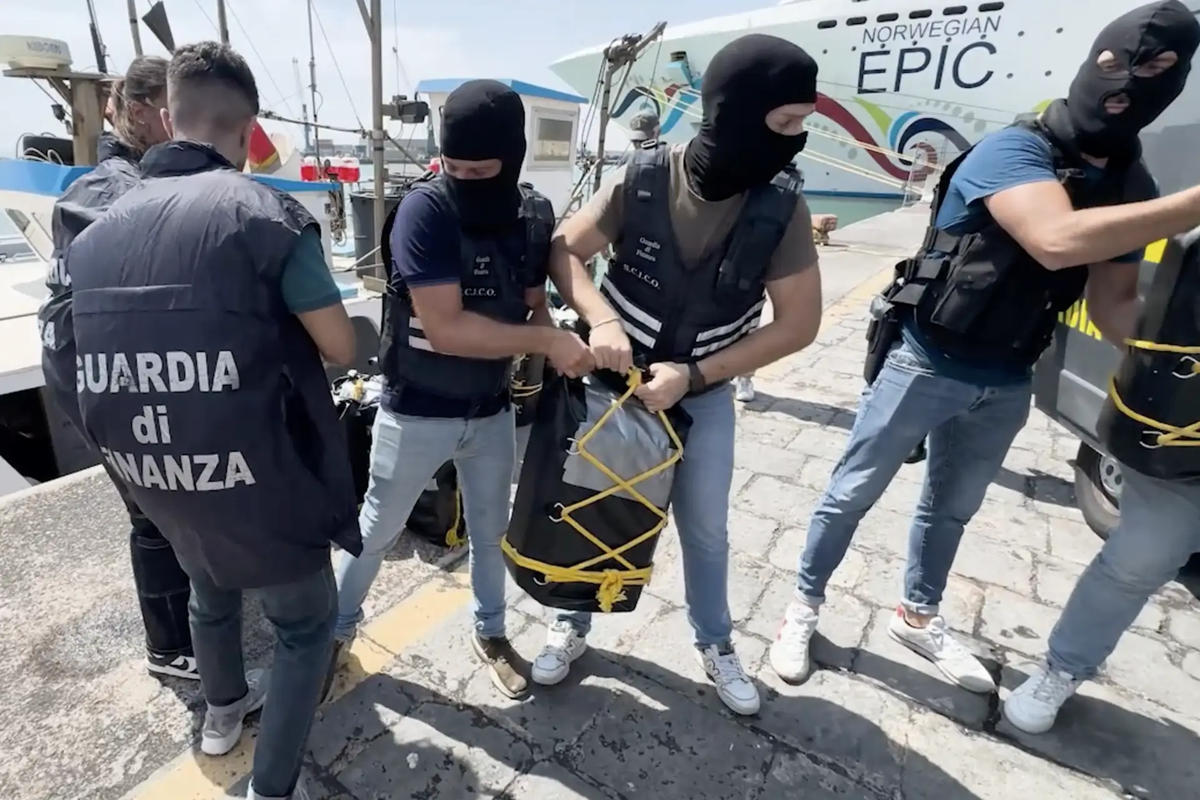
Shortly afterwards, Roan officers board the Plutus, forcing both vessels to head to Sicily, where they are anchored and their crews arrested.
These are not small-scale operations. A shipment of five or more tonnes, valued at half a billion dollars, does not allow for improvisation. Managing them requires criminal organisations that are in agreement on both sides. Latin American drug cartels act as sellers and are responsible for loading the ship at departure; Italian mafias act as buyers and are responsible for recovery off the coast of the Mediterranean Sea, preferably in international waters to be less easily prosecuted by the law of one country or another.
A network of collusion is necessary, involving ship captains and crews, and, most probably, the shipowners themselves. It is implausible - and highly risky - that 5,000 kilos of cocaine stored on a ship and then launched into the water without the captain noticing. Just as unlikely is the idea that captains and crews could organise this level of trafficking without the shipowner's knowledge.
The drop-off phenomenon was identified through the intelligence work of MOAC, the Maritime Analysis and Operations Centre, located in Lisbon. Established in 2007, MOAC was founded with the participation of seven European countries and the US Drug Enforcement Agency (DEA). Belgium and the Netherlands recently joined. MAOC analyses and gathers intelligence on non-container shipping traffic, or container ships that make drop-offs, and sends the reports to national authorities, which then take action.
“When a country has suspicions about a vessel, it can 'register’ it with MAOC and it becomes a kind of ‘special surveillance’ target,” said Colonel Luca Parrilli, liaison officer of the Central Anti-Drug Services Directorate at the MAOC However, the country that registers the vessel is almost never the one that stops it,” he said, because there are few member countries. “Even countries that are not members of MAOC, such as Turkey, can report a vessel or request information, but they cannot ask MAOC to do the tracking and intelligence on specific vessels.”
“Italy is a bit like the 'gatekeeper' of the MAOC,” Parrilli said, “it doesn't play a front-line role because it is only touched by the Mediterranean Sea, but obviously we intercept everything that goes to North Africa, Turkey, or the Middle East, including the Plutus.”
“Many of the ships that make drop-offs load cocaine in the waters off Trinidad and Tobago, east of Trinidad, while others load in the waters off Suriname,” said Parrilli. Another popular loading area is around Venezuela in the Caribbean. Once they cross the Atlantic, “the ships often make drop-offs in the area off Western Sahara between Morocco and Mauritania. But for us at MAOC, that's a blind spot.”
MAOC seeks to collaborate with maritime and anti-drug authorities worldwide. It has jurisdiction over drug traffickers and mafia groups within Europe only, not internationally. Its primary mission is to track and analyse vessels, which includes linking them to known criminals, but not to investigate mafia or criminal associations, a task that remains the responsibility of national police and prosecutors.
In 2023, MAOC achieved record cocaine seizures, more than 80 tonnes, up from a high of 12 tonnes the previous year, primarily due to the drop-off phenomenon. A source familiar with the facts, who must remain anonymous for their safety, told us that at least 250 tonnes of cocaine have been shipped into Europe this way, transported by a fleet run by a trafficking network of Çetinkaya, the Albanian mafia and Italy’s ‘ndrangheta.
FROM A SHIP TO A FLEET
The first signs of the trafficking appeared in 2020 when a 43-metre fishing boat was detained off the coast of Dakar, Senegal, with 1,300 kilos of cocaine on board. The crew attempted to scuttle the ship and destroy the evidence but failed. In February 2021, the Nehir, a cargo ship en route to Europe from Suriname with 3.5 tonnes of cocaine, was intercepted off the coast of Galicia. This time, the crew succeeded in sinking the boat but were arrested nonetheless. The following year, in April 2022, authorities identified a fishing boat in the Canary Islands carrying two tonnes of cocaine after it had crossed paths with a cargo vessel.
But it wasn’t until months later, in July 2022, that the scale of the operation became apparent. A ship called the Ocean Blue left Guinea-Bissau loaded with two tonnes of fish feed and headed towards Turkey. The boat had been reported as carrying cocaine, and Turkey’s anti-drug authorities were watching.
At 10 p.m. on 27 July, the ship was in the Aegean Sea close to the popular tourist town of Bodrum and the Greek islands of Kos and Kalolimnos when a large, 27-metre yacht called the Belgor headed towards it. The yacht pulled up alongside the Ocean Blue and remained there for a few minutes before setting off in the direction of the Turkish coast.
Through night vision goggles, the Turkish Coast Guard watched the scene unfold and then ordered the Belgor to cut its engines. Instead, the yacht hit the gas and raced off towards Greek territorial waters. The Ocean Blue, much heavier and unable to manoeuvre as quickly, was forced to comply with the order and was boarded.
The captain of the Belgor had no intention of surrendering, however. Despite repeated radio warnings from the Coast Guard, it refused to abandon its escape to Greece. Police fired shots into the air as a warning. The Belgor was undeterred. Seeing that there was no crew on the yacht’s stern, the coastguard fired at the engine. Again, the crew did not give up.
The yacht began to manoeuvre aggressively, trying to capsize the three Coast Guard boats and forcing the officers to slow and change course to stay afloat. The Belgor rammed them, causing heavy damage, before surging ahead toward the Greek island of Kalymnos, just north of Kos.
With Turkish territorial waters running out, reinforcements finally closed in. They surrounded the yacht and forced it to stop, thus bringing an end to one of the more dramatic acts of piracy in the Mediterranean in recent times.
The four men on board the Belgor were found to be Turks. The illicit cargo was not with them. The officers were able to locate only two bags containing a kilo of marijuana, but no cocaine.
Knowing that the crew had taken risks far too great for a small haul of marijuana, authorities were certain it had been carrying cocaine transhipped from the Ocean Blue. The cargo, they believed, had been thrown into the sea.
So, tracing the coordinates of the chase, the coastguard mapped out the route that a floating cargo might have taken, alerting fishermen in the area. It was only a matter of days before the first fisherman called. Eighty kilos of 70% pure cocaine were “fished” out of the sea.
But the Ocean Blue was carrying well over that amount. “Before entering Turkish territorial waters, the Ocean Blue had already dumped 4,900 kilos of cocaine south of the Sicilian coast, in the same spot where the Plutus later unloaded the five tonnes,” the classified source explained to IrpiMedia.
Maritime Intelligence That Stops Cocaine – The Data
Cocaine seizures linked to the activities of MAOC, the Maritime Analysis and Operations Centre in Lisbon, between 2007 and 2024 (in tons).
﹌
Less than a year later, in March 2023, MAOC reported the arrival of another suspicious cargo ship in the Mediterranean: the Singapore Spirit. It had sailed from Trinidad and Tobago and was en route to Turkey. But as it reached the waters south of Sicily, it stopped and dumped its cargo into the sea. The air and naval unit of the Guardia di Finanza in Palermo was already waiting for it, but was unable to get close due to bad weather.
The ship moved off. Soon after, Sicilian fishing boats were seen conducting a “comb search” for the cargo, which had begun drifting towards Libya, more than 30 nautical miles away. Eventually, the Guardia di Finanza located the haul via aerial surveillance. When they finally caught up to it, they found over two tonnes of pure cocaine. But it was too late to stop the ship's crew, who were long gone.
On 7 April 2023, the French navy seized four tonnes of cocaine on the Turkish cargo ship Med Sea Lion off the coast of Sierra Leone. According to the MAOC, the cocaine was loaded in Suriname. And in June of the same year, the Shark was stopped off the coast of Mauritania with 1.2 tonnes on board.
A month later, the Palermo Air and Naval Command got lucky after the MAOC reported the arrival of the Plutus en route to Turkey from Trinidad. “Both the Plutus and the Singapore Spirit loaded [the cocaine] in the waters off Trinidad, east of Trinidad, as evidenced by the fact that it made some strange turns there. There are many ships that load in that area, going up and down east of Trinidad,” explained Colonel Luca Parrilli, from MAOC.
Since the sensational arrest of the Plutus, Italian authorities have yet to capture more ships carrying out drop-offs. They did seize a shipment of 540 kilos in September 2024 south of Capo Passero, from a Sicilian fishing boat, the Andrea Doria. Investigations are ongoing, and no further information is available at this time.
A month later, on 4 October 2024, another Turkish cargo ship was stopped 130 nautical miles from Lanzarote, in the Canary Islands, by Spanish customs and French police. On board were four tonnes of cocaine. The ship, called Ras, came from Guinea-Bissau, like the Ocean Blue.
The most recent seizure occurred in the Caribbean, specifically in Martinique, in January of this year. This time, however, the ship was not a cargo ship but an oil tanker, also Turkish, called Haliç-Equality. Once again, the French navy intervened, seizing nine tonnes of cocaine. A cargo worth three billion dollars.
The operation against the Haliç-Equality is the result of a new strategy by the MAOC, which now seeks to thwart drop-off ships at the origin of their journey, before they reach the Mediterranean.
ÇETİNKAYA: THE MAN BEHIND THE DROP-OFF SHIPS
The scale of the global maritime traffic, combined with the utmost secrecy in which the criminal organisation operates, means that no national police force, not even the MAOC, has a complete picture of the organisations, individuals, and ships involved. By bringing together sources from multiple legal and intelligence contexts, IrpiMedia has been able to reconstruct at least part of the network.
A recent indictment request by the Istanbul Anti-Money Laundering Prosecutor's Office reveals that the maritime logistics behind drop-off trafficking in the Mediterranean – at least most of the ships identified by IrpiMedia – were coordinated by a network of Turkish operatives and shipowners acting on behalf of one of Turkey’s most powerful drug traffickers: Urfi Çetinkaya, a veritable kingpin.
With a past in illegal cigarette and weapons smuggling, Çetinkaya – who died in prison in September 2024 – spent years running a gang of heroin traffickers with tentacles in Iran, the Netherlands, and Spain and beyond. Since at least 2020, he had become deeply enmeshed in the Latin America to Europe cocaine trade, providing the logistics network needed to carry out mid-sea drop-offs.
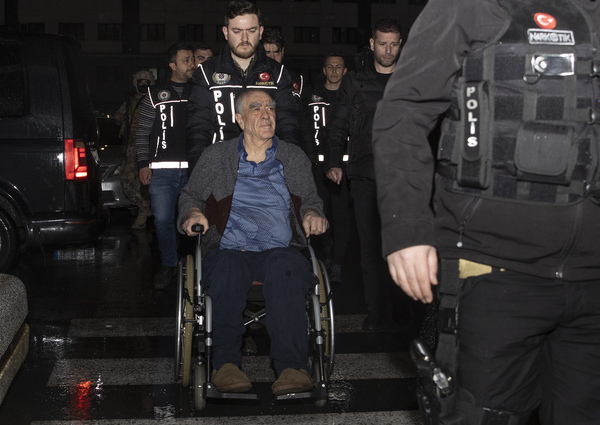
Çetinkaya, known as Abi (meaning “older brother”) and dubbed the “Turkish Escobar,” ran his mafia gang with absolute authority. He became a fugitive in 2014 following a conviction for heroin trafficking, hiding somewhere in Istanbul, surrounded only by loyal followers. He never communicated by telephone and left no fingerprints. He gave his orders directly in person. Like former head of the Cosa Nostra, Matteo Messina Denaro, Çetinkaya lived within the eyeline of police and investigators, yet remained completely invisible.
His empire was tightly controlled. His son oversaw a team of money launderers that washed the drug proceeds and reinvested them in legitimate businesses, such as marble and mining companies, real estate, and automobiles. Police eventually traced over $500 million in assets.
Malta played a key role in the movement of illicit cash. One of Çetinkaya’s trusted associates established seven oil shipping firms there, through which he funnelled millions of euros.
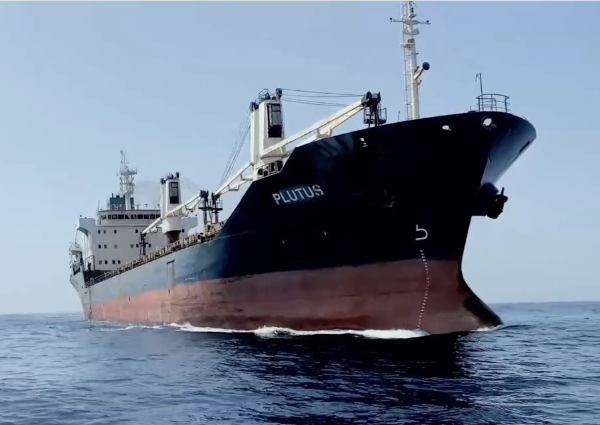
Plutus ship
Urfi Çetinkaya
The man who managed the drug trafficking operations on Çetinkaya’s behalf was Ali Korman Erbacıoğlu, a 60-year-old faithful lieutenant and owner of shipping and oil companies. He oversaw the gang's entire cocaine operation, commanding a highly organised team that secured ships and Colombian cocaine supplies.
The gang orchestrated the loading of merchandise in places like Suriname, Trinidad and Tobago, and parts of West Africa. And then managed the drop-offs in the Mediterranean. Ali Korman Erbacıoğlu was so deeply involved in the operations that he exposed himself to significant personal risk – he captained the Belgor yacht during its rendezvous with the Ocean Blue and its dramatic attempted escape near Bodrum.
Erbacıoğlu, known as Babacan (meaning “father-like” in Turkish), has a number of contacts with shipowners who provided vessels and crews for drug trafficking operations. Most are Turks, but the network also includes Ukrainians, Azerbaijanis, and Syrians.
Babacan takes orders directly from the boss, Abi. Unlike Çetinkaya, however, he uses encrypted technology to communicate with others. The team he headed used Anom, the app created by the FBI as a decoy in 2020 and 2021, before switching to Sky Ecc. It is thanks to the messages exchanged on both platforms that Turkish investigators were able to reconstruct the drug trafficking operations of the Çetinkaya group. They charged Çetinkaya, Erbacıoğlu, and several associates with cocaine shipments transported on the ships, Light 1, Nehir, Akt 1, Ocean Blue and Shark.
The man reporting to Babacan is Sinan Köroğlu, known as Blue, a moniker the police believe inspired the name of the Ocean Blue. A former member of the Turkish Coast Guard, Köroğlu is responsible for the technical coordination of the gang’s maritime drug operations. He relays Babacan’s orders to a network of subordinates who handle various crews and ships while acting as frontmen for the shipping companies that own or operate them.
Between April 2021, when the Ocean Blue began sailing for the Çetinkaya gang, and the day it was raided in July 2022, the vessel is believed to have carried out six illegal shipments from Latin America to Italy, carrying at least 30 tonnes of cocaine.
Following the seizure of the Ocean Blue and the arrest of Babacan on board the Belgor in July 2022, Sinan Köroğlu took over the drug trafficking operations. And at his side, replacing Babacan, was a powerful shipowner “YD” from the even more powerful Meşkinan tribe of Mardin, a fortress city in the south-east of the country. Mardin is far from the sea, yet home to sailors, shipowners, and great merchants. YD had supplied many of the ships used in the Çetinkaya clan's trafficking. After Babacan's arrest, YD claimed the group owed him money and, in exchange, became a partner in the criminal business to recover the debt.
Turkish authorities believe that YD has a history of involvement in smuggling because some of his ships have been arrested for trafficking weapons, diesel fuel, and migrants. YD himself has never been officially investigated for cocaine trafficking, which is why we are not revealing his name at this time. Some believe he has guardian angels: from his tribe are also two politicians from President Erdoğan's AK Party.
Sinan Köroğlu and YD make a perfect team on paper. The former has knowledge and contacts gained from years of working as an operative for Çetinkaya. The latter has access to ships and a desire to make money. Their first known operation was to organise the voyage of the Singapore Spirit from Suriname to Italy.
Officially, both men are still working for Çetinkaya when they strike a deal with Colombians, Albanians and the 'Ndrangheta in early 2023. But a disagreement between the parties in the midst of one operation inspires the pair to attempt to scam their partners.
The Singapore Spirit sets sail from the Caribbean with six tonnes of cocaine on board. As it approaches the Mediterranean in early March, the Albanians and Italians begin to argue over where exactly the shipment will be dumped.
Taking advantage of the confusion, the two Turks decide to toss only 2.5 tonnes of their cargo overboard for their partners. They keep 3.5 tonnes for themselves. They failed to anticipate that the Guardia di Finanza would confiscate the cargo. So when the Guardia di Finanza later proudly announce the seizure of a much smaller haul than Çetinkaya expects, he discovers the pair’s betrayal. He is believed to have ordered the beating of YD, who allegedly promised to repay the stolen cargo.
But then police arrested 66-year-old Çetinkaya on 12 April after a months-long nationwide operation against his criminal empire. “Rumour has it that it was the two who revealed his hiding place," a source told IrpiMedia. While Çetinkaya would die in prison less than six months later, the infrastructure of Mediterranean drop-offs remained intact. Sinan Köroğlu and YD are ready to take over the contacts with sellers and buyers and run the fleets and crews.
They then organise the voyage of the Plutus.
AN INTERNATIONAL CONSORTIUM
It is possible to gain insight into the international dealings between organised crime groups by examining the movements, landings, and interactions of the ships. At the ‘hottest’ areas of the journeys, all of the drop-off ships turn off their AIS. But it also makes it impossible to accurately locate the exact spots where the cargo ships rendezvous with smaller boats or their proximity to strategic ports.
What is clear from the data collected about their activities in the Caribbean is that ships loading in Suriname use Dutch-Moroccan organisations. Those in Trinidad and Tobago employ local gangs. And, based on maritime documents issued to Plutus by a company in the port of Sucre, Venezuela, there may also be the involvement of Venezuelan organised crime.
But while these local groups provide critical operational support, such as speedy boats, they all answer to Colombian drug cartels, according to the expert opinion of reporters at Guardian Media, IrpiMedia’s colleagues in Trinidad.
Exactly which of the Colombian cartels supplies cocaine for these drop-offs is unknown. It remains an open question that investigators are trying to answer. But they are sure that the cocaine is Colombian. Police in several countries confirmed this to IrpiMedia, as did the travels of one of Urfi Çetinkaya’s associates to Bogotá.
Turkish investigators state that the Colombians are part of the “drop-off consortium” and claim 50% of the profits. The rest is divided between the Albanians (45%) and the Turks (5%). The Italians, specifically the Calabrians, are believed to be the sole buyers, who pay the Albanians directly, who then take care of the other partners.
There are more clues about the identities of the Albanians and Calabrians to be found by cross-referencing Italian and Turkish investigations. The general impression is that this international consortium operates by exploiting jurisdictional gaps and international waters, making it difficult to cause them any meaningful disruption.
The arrest of Urfi Çetinkaya on 12 April 2023 allows us a peek inside their partners, the Albanians. When the police raided Çetinkaya's hideout, they found him sitting among a group of drug traffickers. One of them was Albanian Saimir Bilacaj, who was searched but then released.
Bilacaj operates internationally between Turkey, Spain, and Italy –his nickname is “Milanino,” meaning Little Milan. He is linked to the Kompania Bello, the most powerful Albanian mafia group, and supplies Latin American cocaine to the Milanese 'Ndrangheta. This was uncovered during the 2024 “Doppia Curva” investigation into 'Ndrangheta’s infiltration of Italian football fan clubs, which also showed the extent to which the Albanians have become a fundamental component.
The Criminal Network Behind the Drop-Off
There is a "criminal consortium" behind the cocaine trafficking in drop-off mode:
- A Colombian drug cartel supplies the cocaine and controls 50% of the deal.
- An Albanian group linked to Kompania Bello has contacts with the Colombians and coordinates the various players, controlling 45% of the profits.
- The Turkish group connected to Urfi Çetinkaya handles the logistics and keeps 5% of the profits.
- The 'Ndrangheta is the final buyer and is responsible for coordinating the recovery operations of the drugs at sea.
HE WHO PAYS REMAINS UNTOUCHABLE
A man of Albanian nationality was also on board the Ferdinando d'Aragona, the fishing boat that recovered the Plutus's cargo at sea. He was hired by the ship's captain, a young man from Bagnara Calabra. It is for this reason, and other evidence gathered during the investigation, that the police suspect that the cargo was destined for the 'Ndrangheta, in particular the Locride clans.
Some critical questions remained unresolved during the trial. The captains of the two vessels chose to remain silent. In December 2024, they were sentenced to 16 years in prison for drug trafficking. The arrested sailors, however, decided to argue their innocence and hired Sicilian lawyers Anna Maria Polizzi and Leonardo Marino, experts in assisting maritime crews. The sailors said they had been threatened by two Turkish crew members, Erkan Tekin and Tahir Ergin Aycun, and forced to collaborate with the shipment of “a particular, dangerous substance” off the coast of Trinidad.
They were successful. The Plutus crew was acquitted at the hearing on 3 July. The two Turks, Erkan Tekin and Tahir Ergin Aycun, were sentenced to 20 years in jail. Tahir Ergin Aycun, from Mardin, had allegedly previously participated in the Singapore Spirit operation and is a relative and trusted associate of YD.
It was not possible to reach YD and Köroğlu for comment. None of the sailors who stood trial in Sicily has replied to a request for comment sent to their lawyers. Neither did anyone name the shipowners or criminal organisations behind the criminal trafficking operations.
Wiretaps from Turkey show that the Çetinkaya group covered the sailors’ legal fees to ensure their silence in the cases where their boats were involved. These “bosses” remain hidden behind a complex network of companies registered in secretive tax havens, protecting themselves and a fleet of ships that never stop moving – whether through the Black Sea, Latin America, West Africa, or Libya, as IrpiMedia has found. A few arrests and seized shipments, sunken vessels and mob deaths are unlikely to disrupt drop-offs, now a firmly established cocaine trafficking practice that threatens to turn the Mediterranean into a modern-day Nassau.
Additional reporting by Can Bursalı and Simone Olivelli
Editing: Craig Shaw and Giulio Rubino
Graphics: Lorenzo Bodrero
Thanks to Cemre Demircioğlu, Zeynep Şentek
RELATED STORY
The Mafia Ambassador
Recent police raids against the Camorra mafia group across Europe reveal alleged plots to traffic marijuana, cocaine and guns. But the suspects were surprising: two ex-diplomats for the United Nations
Craig Shaw, Lorenzo Bagnoli, Lorenzo Bodrero | 04 September 2017