Between 2018 and 2024, Turkey lost around 1,860 km² of nature and cropland —an area larger than the Anatolian side of Istanbul. Fields and pastures. Forests and scrublands. Wetlands and lakesides. These places, some formerly protected by law, have now been permanently destroyed to serve Turkey’s rapacious appetite for construction.
The reasons for this artificialisation – changing natural, agricultural, or forest land into artificial ground – vary. While housing is a major factor in the nature loss, other less public-interest cases stand out: hotel complexes, airports, power plants and even a port to manufacture luxury yachts for the mega-rich. Lakesides once safeguarded for nature, nutrient-rich soil on which farmers grew food, were handed over to holiday bungalows and industrial zones.
Turkey’s nature is being traded, piece by piece, at an alarming rate.
In the six-year period, Turkey erased enough nature and agricultural land to cover 260,000 football pitches; that is an area 150 percent bigger than Rome, 17 times larger than Paris and twice the size of Berlin. It is 100 Beşiktaşes or 72 Kadıköys.
Green to Grey is a new cross-border investigation by The Black Sea and initiated by Arena for Journalism in Europe and the Norwegian Broadcasting Corporation, NRK. In total, 41 journalists and scientists from 11 countries collaborated with the Norwegian Institute for Nature Research, Nina, to refine its novel methodology for measuring nature loss. Using satellite imagery, artificial intelligence, and on-the-ground reporting, the investigation reveals a widespread and accelerating disappearance of Europe’s natural and agricultural land. Nina now intends to take the project global, through a crowdsourced citizen science initiative.
What we found is staggering. The study, which includes EEA countries, the UK, Ukraine and the Balkans, revealed that these 30 countries lost approximately 9,000 km² of nature and cropland between 2018 and 2024, an area roughly the size of Cyprus (Liechtenstein, Luxembourg, Cyprus, Malta were excluded). Every year during this period, construction replaced 900 km² of nature and 600 km² of agricultural land. This is equivalent to approximately 30 km² being destroyed each week, the area of 600 football pitches every single day.
Turkey was by far the biggest offender among the countries analysed. Although it accounts for only 12 percent of the total land area we examined, it was responsible for nearly 21 percent of the nature lost. It amounts to around 0.83 km² of nature being erased every day, equivalent to 116 football pitches.
TURKEY IN GREY
Digging into the data reveals that Turkey is not only the worst offender of nature and agricultural land loss in Europe, but also overwhelmingly dominates the list of the most extreme cases.
In fact, eighteen of the twenty largest examples of encroachment on nature are in Turkey. Of Turkey’s own top 20, eleven are organised industrial zones, known as OSBs, state-supported manufacturing hubs that entice businesses with tax breaks, lower utility costs, and looser regulations. The number of OSBs in Turkey during the six-year period we analysed has increased by 43 to over 410, with many new projects planned.
The land destroyed in these few years amounts to 31 km², more than 4,300 football pitches. And most of the OSBs remain unfinished, meaning the eventual land taken will rise in the coming years as projects are completed. In addition to the brand-new sites, there were expansions to 60 existing OSBs that were established before 2018. If combined, the total number of organised industrial zones that contributed to artificialisation exceeds 120 – in just six years.
The findings highlight Turkey’s willingness to accede valuable public and agricultural lands for industry. But these developments not only erase nature, they also claim valuable croplands, which are often very flat and close to water sources.
“The slope level of soil on agricultural land is generally close to zero,” said Dr. Esra Yazıcı Gökmen, Urban and Regional Planning Expert at Tema Foundation, Turkey’s prominent environmental rights NGO. "This makes agricultural land more attractive because it reduces infrastructure and construction costs. Moreover, proximity to water resources in these areas is also critical for industrial activities.”
The decisions to expropriate land for industrial development have further negative impacts. OSBs, particularly in Turkey, come with significant environmental and health consequences, often depleting water sources and clean air, while increasing disease among locals. There is often additional land loss due to associated infrastructure projects, such as worker housing complexes, massive highways, and ports.
The largest of these OSBs are in Gaziantep, Aksaray, Balıkesir, and Taşpınar. We took a closer look at the Taşpınar case and the establishment of its much-touted Teknosab site – an industrial zone that neither locals wanted nor businesses needed.
⌂⌂⌂
Taşpınar village in Bursa, under the siege of an industrial zone.
⌂⌂⌂
For decades, Taşpınar was a thriving farming community, blessed with fertile soils that yielded wheat and barley, and home to vibrant orchards. Sitting in a fruitful corridor between the Marmara Sea and Lake Uluabat, a Ramsar-protected wetland, the area was alive with a diverse array of bird species. Villagers ploughed the fields, cows grazed on its meadows, and the coffeehouse bustled with the young and the old. The tradition of imece – the communal solidarity and collective work– was enduring.
Today, Taşpınar is empty. Its fields have been seized, its houses abandoned, its community fractured by the bleak expanse of concrete. The farmland that once sustained the local way of life has been swallowed by Teknosab, “Turkey’s first new generation local innovative and green organised industrial zone.”
It is a striking testament to Turkey’s determination to expand industry, even at the expense of its most productive soils and the villages that depended on them.
The path to Teknosab began over a decade ago. In 2012, Bursa’s City Council held meetings with scientists, trade unions, chambers of commerce, and citizens to plan the region’s future. The consensus was unanimous. There was no need for another industrial zone. Existing sites were underused, with vacancy rates as high as 40 percent. “The conclusion was there’s no need for a new industrial zone,” said Ertuğrul Aksoy, a professor at Uludağ University and head of the Bursa City Council.
But just three years later, investors pressed ahead with a proposal for a sprawling industrial zone west of Bursa – in Taşpınar. Inspectors confirmed what farmers already knew: the soil was valuable, rich in nutrients, and ideal for agriculture. Reports by experts, including the Union of Chambers of Turkish Engineers and Architects (TMMOB), warned that any construction project would strip villagers of their land and pose a threat to Lake Uluabat. The courts felt differently. Seeing “overriding public interest” in the project, judges ruled in Teknosab’s favour.
In 2015, the expropriations began. Officials told villagers they would be compensated with new land, but when farmers like Mustafa Cingöz went to claim what they were promised, they were told there were no plots available.
After realising he would soon be landless, Cingöz sued in court to halt the transfer. The case was unsuccessful: “Everything was always in their [Teknosab’s] favour,” he said. "I never came across a judge who sided with us. We followed other, similar cases, and the villagers never won.” He lost 2.1 hectares.
Villagers also describe "persuasion rooms," meetings that took place in a space above the coffeehouse, where officials attempted to appeal to their sense of patriotism by declaring that the Turkish state would build the factories. Instead, the land went to private companies.
A decade on, locals’ predictions that the site was unneeded proved correct. Most of the parcels stand empty. Far from an “innovative and green" revolution, most of the companies that operate there produce chemicals, textiles, and steel, which are largely indistinguishable from those of Turkey’s other 400-plus industrial zones. The damage to Taşpınar, however, is irreversible.
The extent of Teknosab’s impact on Uluabat’s vital water supply is also uncertain, a lake home to the European stork village, Eskikaraağaç. Under an agreement signed with the State Hydraulic Works, Teknosab will be granted access to 18.5 million cubic metres of water per year, equivalent to 7,400 Olympic-sized swimming pools, from Çınarcık Dam, which is essential for maintaining the lake.
“Transferring fresh water from the Çınarcık Dam to Uluabat is extremely important for the lake’s ecological life,” said Serdar Atilla Erdem, Chairman of the Bursa Branch of the Chamber of Civil Engineers.
Back in the village, Cingöz, one of the few still holding on, tells us, “This coffeehouse used to be full. Young and old, full of life. Now we’re four people sitting here. It messes with you psychologically. No one is left.”
Ten minutes north of Taşpınar, Turkey’s housing authority TOKİ is constructing a new apartment complex on 72 hectares, in anticipation of a population surge that has yet to materialise. Of the animals and creatures that inhabit its flora, the experts who prepared the project’s EIA were unconcerned: the construction noise will scare them off to more “suitable” habitats.
Further north still, in Hürriyet, land has also been expropriated for Teknosab and its logistical infrastructure, highways and a railway. Nejla Özkılıç, from Hürriyet, said: “Only the name ‘villager’ remains. But how can you call someone a villager if they no longer have a village?”
Kandıra Organised Industrial Zone is located in Kocaeli, just outside of İstanbul. Despite its construction starting in 2019, it remains empty.
Tarsus Organised Industrial Zone in Mersin. Another example of agricultural land loss to industrial zones in Turkey.
“NOTHING IS LEFT. WE ARE TRAPPED”
The images show what was once a vital stop for migratory birds along Turkey’s Aegean coast. The Çaltılıdere wetland is now buried beneath more than one square kilometre of concrete – foundations for a facility that will repair and build luxury yachts. Officially designated as a wetland by Turkey, Çaltılıdere was home to flamingos, pelicans, cormorants, sea bream, and sea bass. Despite this, local authorities overturned its protected wetland status in 2017 after a tense and controversial local commission meeting.
Five months before the commission meeting, the president of Yatek Aslan Bilgi made their intentions clear in an interview with an industry magazine: "The previously given [affirmative] wetlands decision regarding this region is causing us to lose some time. We are working to get an opinion from Dokuz Eylül University. If we do not get the result we want, we will get an opinion from Ege University."
They indeed got what they wanted. During the commission meeting, the governor’s office presented a fresh report from Ege University, contradicting earlier findings, that claimed Çaltılıdere “lost its ability to be a habitat for many species.” Yatek rallied around this report, and the governor’s office used it as the primary justification for its final decision.
“They manipulated the process,” said one of the commission members who fought hard to save the area and wanted to stay anonymous out of fear of reprisals, "and got the wetland status revoked.”
Unlike other commission members, he knew Çaltılıdere well and visited it often for birdwatching. “I still think about this place from time to time. And every time I think about it, my heart aches,” he said. “I don’t want to see what it has become.”
Today, on the edge of what was once wetland, concrete stretches as far as the eye can see. The fish and birds are gone. “It used to be all red all around here,” said village resident Gürsel Cakır, 66, remembering the colonies of flamingos. “There would be hundreds of them. When the construction started, it all ended.”
Wetlands and peatlands serve as vital carbon stores and natural flood protection. Their destruction can have dire consequences. “Wetlands act like natural sponges, retaining excess water during rainy periods and gradually releasing it during dry periods, mitigating the effects of both floods and droughts,” said Burçin Yaraşlı, a wetlands specialist with the Doğa Derneği, an environmental association in İzmir. “When these areas are destroyed, people living nearby directly face greater risks.”
Yatek claims the project will bring massive economic growth and thousands of jobs to the area, alongside annual exports worth 500 million euros. “The richest people in Turkey and in the world will bring their big yachts here and repair them or have them built,” a former Yatek director said in 2021.
But in Çaltılıdere, population 600, locals are divided. Some are holding out for jobs, or an increase in the financial value of their land. Others simply feel abandoned. “We couldn’t unite to oppose this together,” said one local fisherman. “Now, nothing is left. We are trapped.”
Yatek told us the “investment is fully compliant with environmental regulations, respectful of nature and ecosystems, socially responsible, and economically beneficial for the region and the country as a whole.” The İzmir governor’s office did not reply to our request for comment.
TINY HOUSE MADNESS
While vast areas of land in Turkey have been swallowed by mega-projects, what stood out in Sapanca were the sheer number of small incursions. In the satellite maps, they appear as clusters of tiny polygons, scattered across the lakeside and into the surrounding hills. From the ground and up close, they are bungalows and so-called “tiny houses” – holiday rentals built on protected land as part of a growing craze of tiny house tourism.
Sapanca, a lakeside town just an hour and a half from Istanbul, has long been a refuge for city-dwellers craving nature. Its forests, streams, and 10,000-year-old lake made it a favourite for weekend and day trips, where visitors would eat breakfast by the lake or barbecue beside Maşukiye stream. The town has been reshaped by its bungalow boom and now resembles a construction site. What began with a handful of locals building a couple of units on old family plots became an epidemic. “In Sapanca, many families, whom we could call locals, had owned plots of land for many years,” said Ali Safa Alaçam, head of Savibu, a bungalow owners’ association. “These had always just sat idle. Families decided to utilise their land and, in a modest way, built one or two units.”
Soon, the allure of easy money became contagious. “There are no limits, and it’s all done by locals,” Alaçam said. “It became a complete economic ecosystem. Everyone benefited. At a table of five people, one runs the bungalow, another does the cleaning, someone else supplies the fridge, their brother runs the breakfast business. We became a chain. That’s why the state turned a blind eye at first.” Today, there are thousands of bungalows built illegally and without permits, ever-creeping into the forests and mountains. The municipality recently admitted there were more than 4,400 bungalows in Sapanca, of which only around 400 were legal.
The boom is no secret. It has become an economic engine for the town, generating billions of lira and fuelling jobs, from cleaners and delivery drivers to restaurant owners and tour operators. But it has also eaten away at Sapanca’s greatest asset: its nature. Public access to much of the lakeside has been blocked and reed beds vital for birdlife have been destroyed. By law, the first 300 metres around the lake, where hundreds of bungalows now stand, is an "absolute protection zone."
In January 2025, instead of clamping down on illegal construction, the Environment Ministry quietly revised Sapanca’s conservation map. Land that had been designated first-grade protection – where building should be forbidden – was downgraded to categories that allow “controlled use.” The change effectively legalised some of the most prominent investments, including NEF Sapanca, a $130 million Kempinski-branded resort, and Lake Look, a luxury complex tied to ruling party insiders, both of which were built on protected land.
"This is not a lawful practice," said Esmanur Çağlak, environmental lawyer. "Sapanca has been under severe tourism-related destruction for many years. Public authorities do not exercise their power over the companies plundering our natural assets. As a result, we are faced with the bungalow invasion in Sapanca today.”
The fight over bungalows has also become increasingly political. The CHP mayor, Nihat Arda Şahin, has paid lip service to stricter regulation while insisting the industry must not "suffocate a newborn." AKP officials, meanwhile, accuse him of mismanaging the boom. The Interior Ministry even opened an investigation into Şahin and his predecessors, a move he dismissed as politically motivated, part of a broader attack by the ruling party on the opposition.
Alongside the ecological damage, Sapanca has developed a new reputation. As one regular visitor from Istanbul put it: “We go to Sapanca to have sex in the jacuzzi, outdoor sex, that kind of thing. Because we like that. That idea appealed to us.” Another, who had been coming since childhood, described the town as “more like a place for forbidden love,” a hotspot for romance and extramarital affairs. On social media, ads for “romantic” tiny houses are often accompanied by offers of sex for sale. Locals speak of rising harassment and violence, and critics said those who complain face threats of violence.
Safety is another concern: fatal fires, hidden cameras in rooms, and even the drowning of a child at an unlicensed site have all been reported in recent years.
Sapanca may look different from Turkey’s mega-projects in scale, but the story is the same: green turning grey. Instead of a single colossal scar, the town shows how thousands of small cuts can transform a landscape, stripping away public space, biodiversity, and community in the name of fast tourism profits.
“We will go on talking about the scale of land destruction in ever-deepening terms,” said Eylem Tuncaelli of Turkey’s largest environmental protection NGO, Tema. “If you don’t follow science, if you don’t follow ethics, if you don’t prioritise the sustainability of life but instead prioritise the sustainability of development, then unfortunately these things happen. Not only in Turkey, but in any country that does this.”
⌂⌂⌂
Despite OSBs accounting for more than half of the largest sites of artificialisation, the data highlighted other mega projects.
The largest of these is the Akkuyu nuclear power plant, in Mersin, which environmental groups fought against for years to prevent its construction. It is still not operational.
Acacia Maden operates an open-pit copper mine in Hanönü, Kastamonu, in the Black Sea Region. The mine has transformed forest land into pits and waste ponds.
News reports say that mine’s discharge pipes have ruptured at least three times, spilling chemical waste to seep into the soil and the Gökırmak River, which feeds into the Kızılırmak basin.
Residents accuse Acacia Maden and state regulators of ignoring evidence of contamination, downplaying risks, and failing to protect public health, agriculture, and ecosystems.
The highway between Aydın and Denizli, in southern Turkey, was opened by Erdoğan this year.
Minister of Transport and Infrastructure Abdulkadir Uraloğlu said that “Ecological bridges, built to reduce traffic accidents involving wild animals, also hold great importance in terms of environmental sensitivity … We are continuing the construction of one such ecological bridge on the Aydın–Denizli Highway.”
Turkey’s Ay Yıldız Müşterek Karargâhı, the new joint operations centre, dubbed the “Turkish Pentagon,” will be larger than its U.S. counterpart.
“We are forming a structure that, in every respect, will strike fear in enemies, confidence in friends,” President Erdoğan said.
The Söğüt Gold Mine in Bilecik, owned by Gübretaş Maden, signed a deal with Finnish Metso to expand the mine last year.
The €70 million contract includes engineering, procurement, structural steel, piping, electrical, automation, and training and supervision.
The Kışladağ Gold Mine is owned by Eldorado Gold Corporation, a Canadian mining company from Vancouver. Turkish news reported that the mine accounts for 10% of Uşak's annual water consumption.
Eldorado Gold was found in 2019 to have violated environmental laws in Greece, after leaching heavy metals into the local stream.
These are not isolated examples. Every day, all across the country, Turkey takes just a little bit more of its vulnerable nature.
“THIS DETERMINES OUR FUTURE. WE CANNOT LIVE IN A STONE DESERT.”
Our Green to Grey partners across Europe found similar cases in abundance, from luxury golf resorts catering to royalty and Hollywood in Portugal to wind turbines atop an untouched mountain in Greece funded by Amazon. Norway to Italy, Finland and France. Everywhere is impacted.
Reporters discovered that the top of the Vermio mountains in northern Greece is being transformed from two so-called “Roadless Areas” of untouched nature into two large wind farms. Amazon has agreed to purchase all power from the Vermio project for the next 20 years. It is not yet clear whether the corporate giant intends to power its data centres or simply acquire clean power certificates.
In the past three years, around 60 km of new roads have been constructed in Roadless Areas of Greece to serve these wind farms, and at least 1.48 km² of untouched nature has been impacted. “Merely months ago, it took courage to make the hike of 2,063 metres up to Vermio’s peak. Today, you can go there by car,” Giorgos Kasapidis, a local activist, said.
In Italy, the areas surrounding the iconic Garda Lake have been transformed by tourist developments, threatening the region’s rich biodiversity. Experts said the shore is being destroyed by sports tourism and claim attempts to protect the area are ineffective.
“Protection is often applied only to marginal or little-frequented areas, while the zones of greatest tourist interest remain unprotected, exposing the lake ecosystem to rapid degradation,” said Osvaldo Negra, zoologist at Muse, the Museum of Science in Trento. “An entire ecological community has been impoverished.”
Far from halting the ongoing destruction of Lake Garda’s fragile ecosystem, local authorities are planning further development to accommodate tourists, who now far outnumber residents. “We are unable to contemplate the concept of limits. More roads, more beds, more infrastructure do not solve the problem. They simply attract more tourists and more pressure,” said Francesco Visentin, professor in human geography at the University of Udine.
Peter Lacoere calls these losses “the tyranny of small decisions." “Each decision in each municipality won’t change a lot, but when you add them all up over time, the consequences are massive for the environment,” he said.
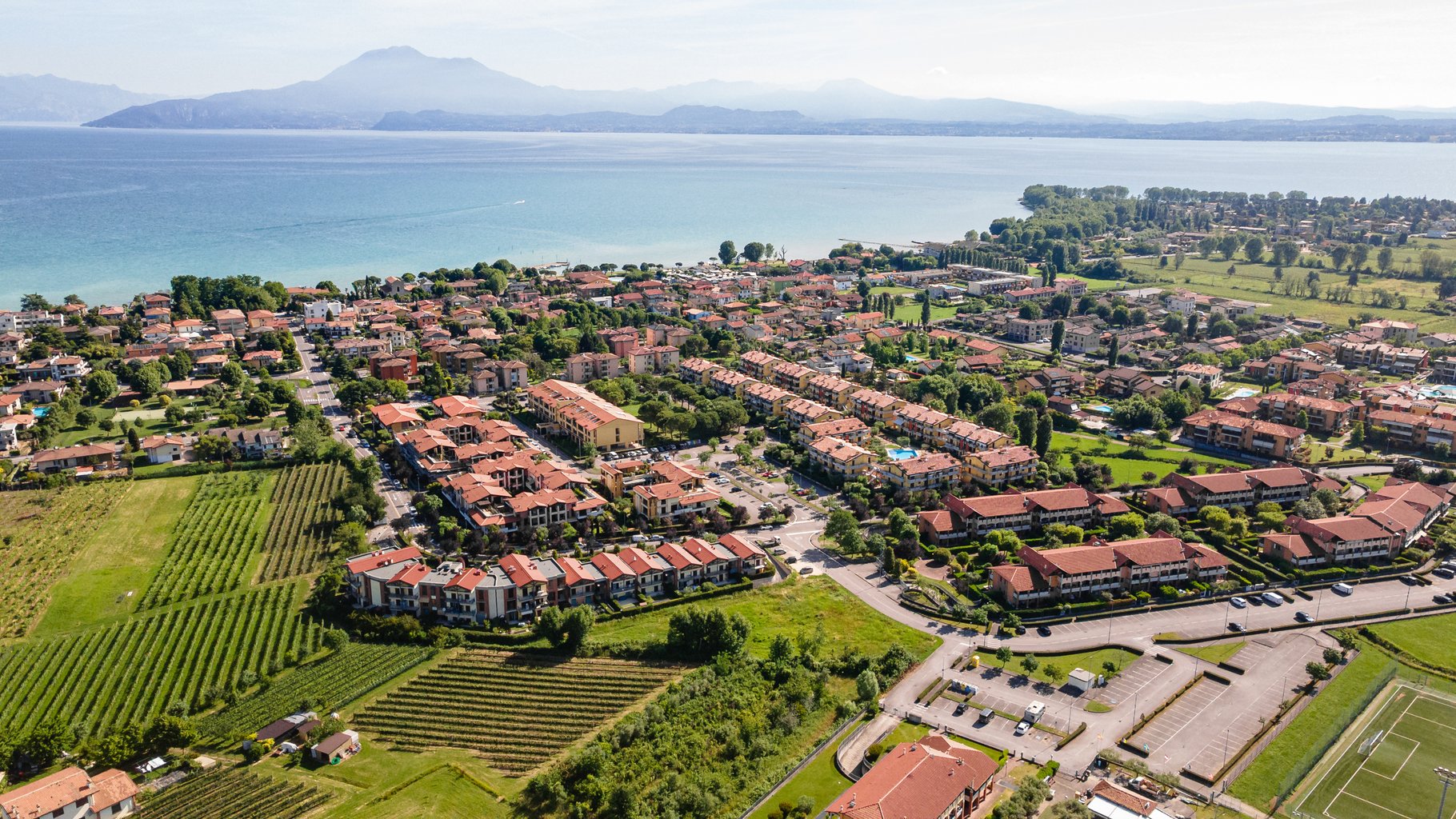
Lake Garda, by Stefano Nicoli / Facta
Losing nature to tourism not only affects countries in the south, like Turkey, Greece, and Italy. From inside the glass-roofed igloos at Utsjoki Arctic Resort in Finland, visitors can now gaze at pristine wilderness, the Arctic, and the Northern Lights. But this is far from untouched nature.
Six years ago, a forest stood where the resort now sprawls. Across Finnish Lapland, we found that 15% of all construction projects that replaced nature since 2018 have been driven by tourism, often for accommodation, including cottages, hotels and cabins.
Rovaniemi, the capital of Lapland, has suffered the region's most significant losses. While Rovaniemi has just 60,000 residents, it receives an avalanche of visitors, recording 1.5 million overnight stays in 2024. As Rovaniemi grows more popular and crowded, tourists venture further afield in search of untrampled snow. The data analysis revealed that in some highly visited places in the region, more than half of the new constructions were related to tourism activities.
Last spring, the municipal council of Inari approved 227 cottage plots along the shore of Lapland’s Lake Inari, in one of the remotest corners of Europe. These plots are located in old-growth forests where indigenous Sámi communities have for generations practised reindeer herding.
“What has been planned is completely absurd. Almost all reindeer herders are concerned about these kinds of developments, whether it’s logging, mining or tourism competing for the same land,” said Elle Maarit Arttijeff, an Inari Sámi reindeer herder, lamenting what amounts to the reversal of a 20-year settlement reached between the state-owned forestry company and herders to protect pastures in the area. “It is so terribly stressful and sad.”
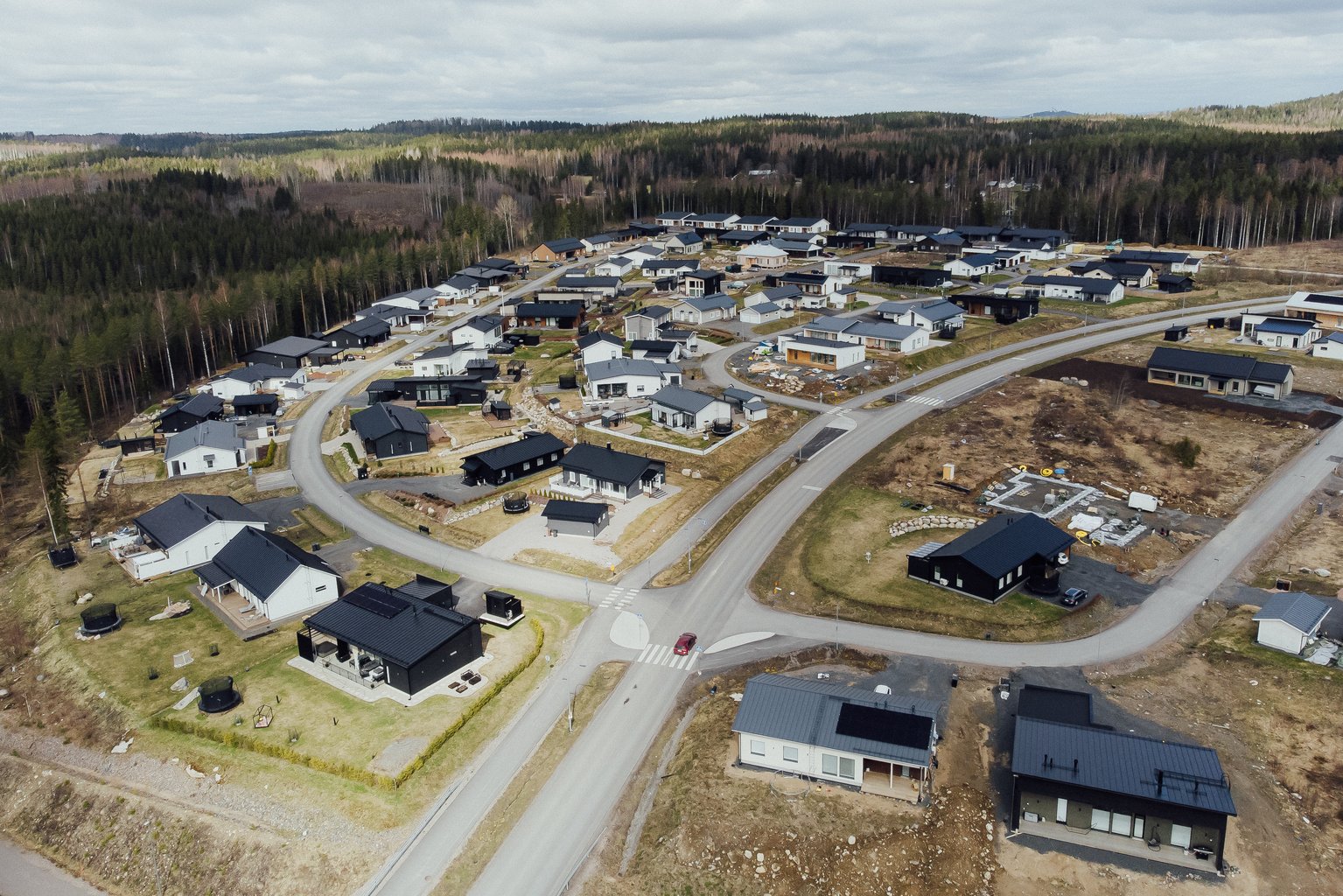
Photo by Mikko Vähäniitty / Long Play
Building on habitats means losing not just animals or native plants, but also crucial natural defences against extreme weather and rising temperatures. More buildings bring more heat and a higher risk of flooding, at a time when Europe, along with the Arctic, is warming faster than any other continent. Gunnar Austrheim, professor in biology at NTNU in Trondheim, co-authored an IPBES Report, which concluded in 2018 that Europe and Central Asia were facing a crisis that would require profound societal changes to change course. Our investigation, he said, shows that politicians failed to act, instead embracing “business as usual.”
Lena Schilling, a Green MEP, said that every forest, fertile field, and biodiversity hotspot destroyed for short-term profit is a betrayal of the promises we made to young people. “For years, the EU has promised to lead on climate and nature protection, but what this investigation shows is that we are literally cementing over our own future,” she said.
In 2024, the EU approved the Nature Restoration Regulation – a pioneering law that aims to revive 90% of degraded habitats across the EU by 2050. For the first time, national governments are obliged to set deadlines and meet targets on nature conservation. The regulation has faced intense pushback from the farming and forestry sector. Questions remain about how these measures will be financed and enforced, as the EU has promised to cut red tape for businesses and has rolled back a number of its ambitious environmental goals over the past year.
Existing laws protecting nature might be next on the chopping block, warn environmental NGOs responsible for a petition, signed by 200,000 EU citizens, calling for current measures to be maintained. Meanwhile, forthcoming EU soil legislation makes no commitment to “no net land take by 2050.”
In September, the European Environment Agency acknowledged in its State of the Environment report that the EU's target of achieving “no net land take” by 2050 is unlikely to be met.
Peter Verburg from VU University Amsterdam said that to reach this goal by 2050, European countries need intermediate, legally binding targets.
“This determines our future. We cannot live in a stone desert,” Verburg said. “We need green space. We need to see trees. We need nature to support us, especially with climate change.”
For Turkey, Tema contends that civil society needs to work harder. “Yes, these things are happening,” said Eylem Tuncaelli, of our findings, “but there are people who can somehow stop this. We are prepared to wage legal battles, if necessary. We are already doing this on a large scale. We also lobby, and we talk to everyone. The point is not to give up."
greentogrey.eu is an investigative data journalism project initiated by Arena for Journalism in Europe and the Norwegian Broadcasting Corporation, NRK. This is a cross-border collaboration between De Standaard (Belgium), Le Monde (France), Long Play (Finland), Die Zeit (Germany), Reporters United (Greece), Facta (Italy), NRK (Norway), Gazeta Wyborcza (Poland), Datadista (Spain), The Black Sea (Turkey), and The Guardian (UK).
Norwegian Institute for Nature Research (NINA) provided scientific expertise for the project.
Read more about the Green to Grey project on the website, greentogrey.eu
Taşpınar drone image by Vedat Örüç
Sapanca photos byÖzge Sebzeci
Akkuyu Power Plant image:
Pléiades Neo © Airbus DS 2025
Pléiades © CNES 2018, Distribution Airbus DS
Satellite images are from Google Earth, with permission.
The Green to Grey project was produced with the support of Journalismfund Europe and IJ4EU.