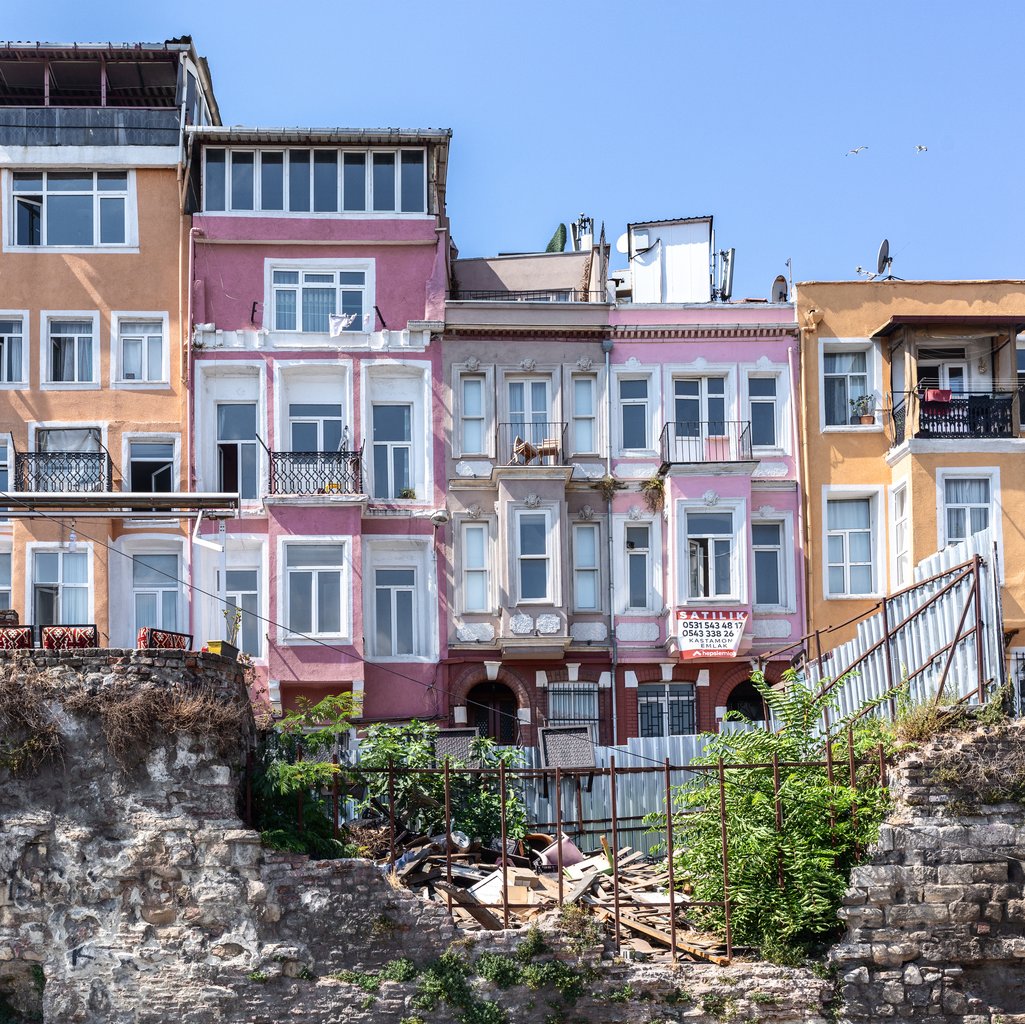
İstanbul. Summer 2025 — Every eight minutes, a tram arrives in Balat and releases hundreds of passengers into the warm streets. Many thousands more tourists will arrive at the same station throughout the day. They will roam Balat's cobblestone streets, once home to Jewish, Romani, Greek, and Armenian communities, but which are now better known for their colourful, Instagram-worthy facades, ‘vintage’ shops, and brightly painted steps.
Located along İstanbul’s Golden Horn, Balat is a small neighbourhood of 12,000 residents in a city of over 16 million. Its two main streets, Vodina and Yıldırım, are filled with cafés and restaurants, where young waiters in black suits and bright smiles, beckon tourists to tables for tea or coffee. The menus and signs hanging on the café walls are all in English, as are most conversations between the waiters and clients. But passing through the streets of Balat reveals too many languages to count.
The tourist boom has been a huge boost for business in Balat. But it has also accelerated the area's gentrification — fully embraced by the local municipality — and led to soaring rents and a community in flux.
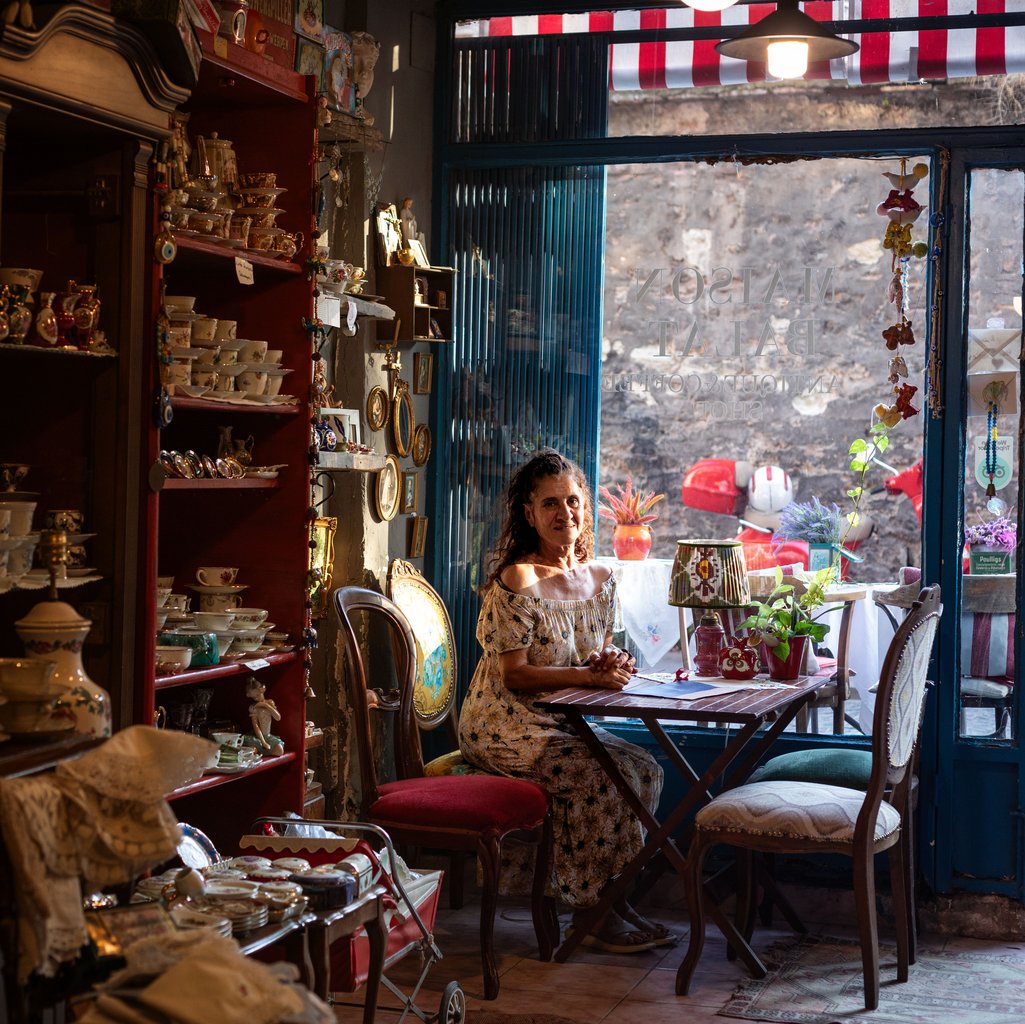
Sixty-year-old Nuray Mikailoğlu personifies these contradictions. She is the owner of Maison Balat, a vintage, French-style café on Vodina Street with colourful tables outside covered with white, embroidered linen sheets and decorated with flowers and aromatic herbs. She opened her café with her son in 2014. “We were also considering Kadıköy, but the rent here was cheaper and I liked the neighbourhood,” explained Nuray. At that time, Kadıköy, on the Asian side of İstanbul, was already well known for its lively nightlife, and so Balat seemed more promising for a new business. And it was.
Maison Balat’s clients are exclusively tourists. Nuray has undoubtedly benefited from the prosperity brought by the daily influx of foreigners to Balat. That same prosperity is now putting her business in danger. “The rent of the place keeps rising. It went from seven to thirty thousand Turkish Lira per month. All my income goes to the rent. If the owner of the place asks me for more money, I will not be able to afford it anymore”. Consequently, her prices are high.
The Turkish Ministry of Tourism reported that, in 2024, İstanbul welcomed 18.6 million overseas tourists, an increase of more than one million from the previous year. While detailed figures for Balat are not available, the effect of the upsurge is evident in the sheer numbers of people on the streets and the growing number of restaurants, clothing shops, and souvenir vendors that have appeared in the last few years.
The issue is affecting the whole of İstanbul. Between 2020 and 2025, monthly rent for a three-bedroom apartment in the city increased by 206%, according to a report released in July 2025 by Deutsche Bank.
Turkish law has attempted to mitigate the housing crisis by imposing a 25% cap on rent increases. This was replaced last year by tying any cap to inflation, which this year remains more than 30%. The maximum legal increase is the 12-month average of the Consumer Price Index (CPI), which is calculated based on monthly inflation data. This has not appeared to help Balat's tenants much. People we talk to say landlords often demand even higher increases, confident that tenants who are unable to pay the new rent, also cannot afford to pursue legal action.
According to an analysis by Turkey’s leading real estate company, Endeksa, the rent of a commercial property in Balat in August 2025 was 570 lira per square meter, more than eleven times the figure from January 2019, when it was just 50 lira. As for the residential properties, the rent price per square meter grew even more over the same period – from 18 lira in January 2019 to 292 liras in August 2025.
“Prices right now are very high, but it wasn’t always like that,” Hakim Obcesoy told The Black Sea. “When I arrived here twenty years ago, there was nothing. No bar, no tourists, no real estate agency. Then me and my business partner, Irfan, started to work and live here, and we talked some other friends into moving here”.
In 2002, Obcesoy and his partner opened a real estate agency in Balat. At the time, the area wasn’t considered a safe place to live. The pair even received threats. Obcesoy said that, as the first people to open a real estate company in Balat, they were a direct challenge to the small-time criminal networks that routinely scammed people looking to buy properties. Often, they would just take their money and disappear. These people, he added, were threatened by new "competition."
Whether true or slightly embellished, Obcesoy and his partner decided to stay in Balat and began promoting the area through TV commercials and newspaper interviews. Their first article, in the Hürriyet newspaper, still hangs on the wall of their office, and Obcesoy pointed at it from his large wooden desk as he told his story.
Obcesoy was well placed to witness Balat’s latest transformation. Home to a large and varied population of religious and ethnic minorities for almost 500 years, Balat saw its fortunes change in the second half of the 20th century, as wealthy families moved out, and industrial workers from Anatolia moved in. After years of neglect, it became rundown and with a reputation for dilapidated Ottoman-era buildings and slightly unsafe streets.
In 2003, using funds from the European Commission, the Fatih municipality, to which Balat belongs, embarked on a rehabilitation project that restored and repaired 121 buildings in the area. One condition of the restoration was that landowners were forbidden to sell their buildings or evict tenants for five years after the works were completed.
For Emre Kishalı, associate professor in Kocaeli University Architecture Department, this restriction was meant to prevent the erosion of Balat's social structure. Instead, it merely postponed it by a few years. “After five years, Balat started to change,” Kishalı said. “Fancy coffee shops were opened one after the other, and the neighbourhood became very touristic. We can say that the gentrification process started around 2013”.
The short-term rental market, powered by Airbnb, has taken over Balat. InsideAirbnb data show that listings in Balat first appeared in 2012. There were eight available. Today, there are 180 listings, managed by 63 hosts. Only 30 of these hosts offer a single property, meaning that more than 80% of the listings are from professional hosts with multiple properties.
The Turkish government introduced a new law (Law 7464) in January 2024 that has attempted to address the lack of affordable housing by tightening the rules on short rentals. Homeowners are now required to obtain permits from the authorities if they wish to rent for less than 100 days. They must also get the consent of all building residents, pay a fee, and display a government-issued notice. For Balat, the law is not so effective. Most homes are single-family residences, meaning the owner doesn’t need to seek anyone’s approval.
Kishalı said the rise of Airbnb and tourism in general is part and parcel of the gentrification process. “When we talk about gentrification, we also talk about tourism,” he explained. “Tourism can be good, but it should be regulated by the Ministry of Environment, Urbanisation and Climate Change in accordance with the Municipality. The problem is that the policy always puts the economic value up front, without caring for the local community”.
An uneasy mix
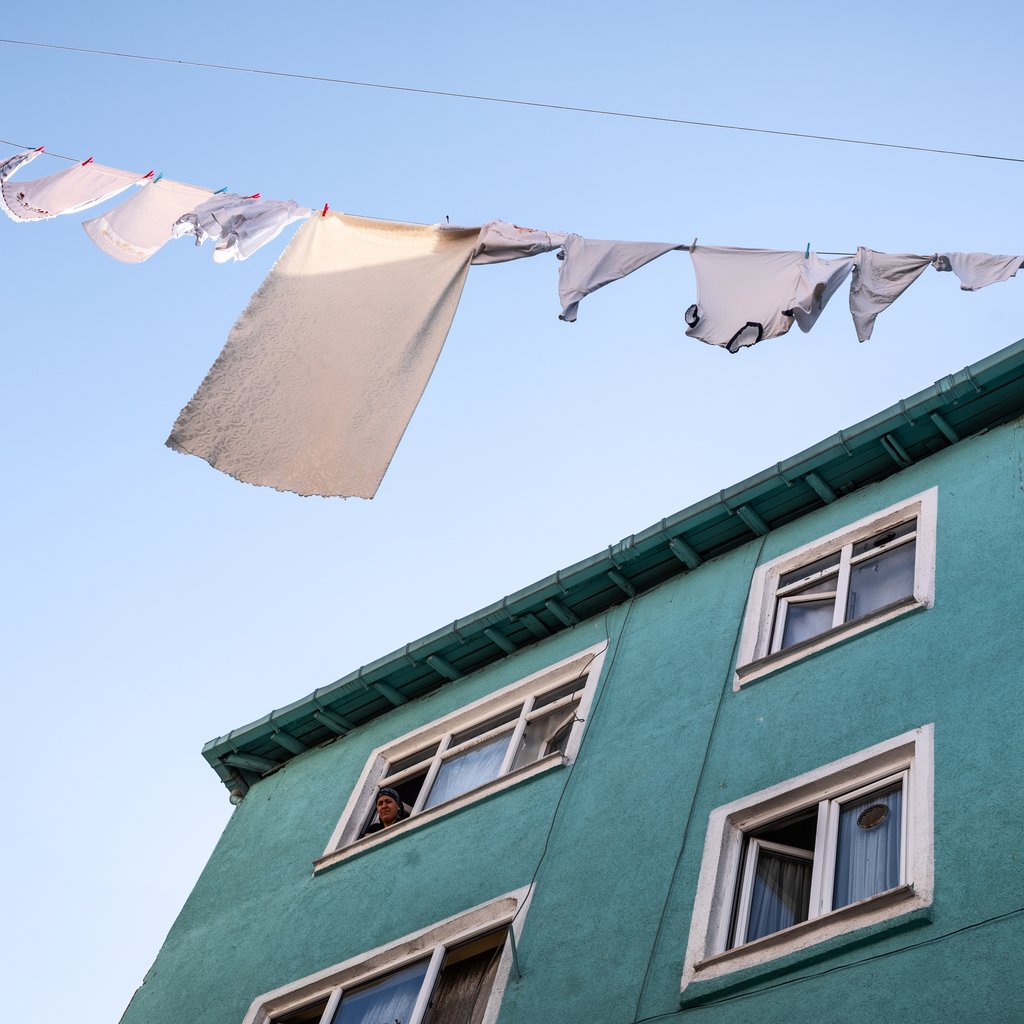
Away from the main streets, the tourists’ presence is less obvious. In the inner part of Balat, rather than upmarket cafés and souvenir stores, there are more small markets and independent shops designed to serve the local residents. Even here, tourism butts up uncomfortably with local life, especially for conservative women.
“Tourists take pictures of us without asking for our permission,” explained a woman who asked to stay anonymous to preserve her privacy. She and some friends are seated on the pavement outside their houses, enjoying an ice cream in the late afternoon. Balat has become so popular that it regularly appears not only in Instagram posts but in the Turkish and international press. One of the women told us, “Once I saw a picture of myself in a magazine. I couldn’t believe my own eyes.”
Tourists and photographers are not the only woes locals must now learn to navigate. As with the commercial properties in the popular streets, residential rents have become increasingly unaffordable: “We are tenants, and our rent doubled this year,” explained one of the women. “Lots of our neighbours have already left because of that”.
In addition to tourists, Balat has become much more attractive to well-heeled immigrants with strong purchasing power. Many of them live on the same street, Kiremit Caddesi, and run a WhatsApp group to stay in touch. Some have bought and renovated properties with the help of a Turkish-British business couple who assist foreigners with buying, renovating, and renting out homes. The Black Sea attempted to contact them, but they declined to talk.
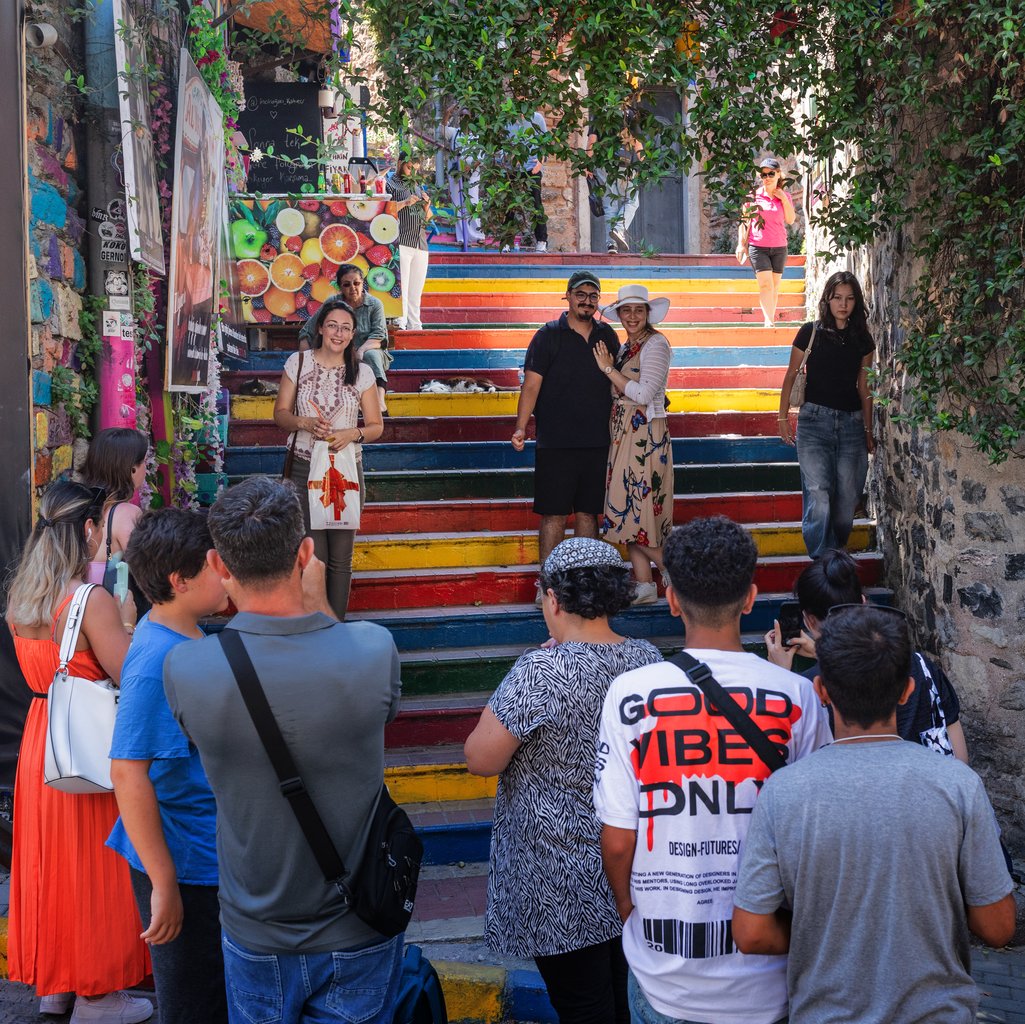
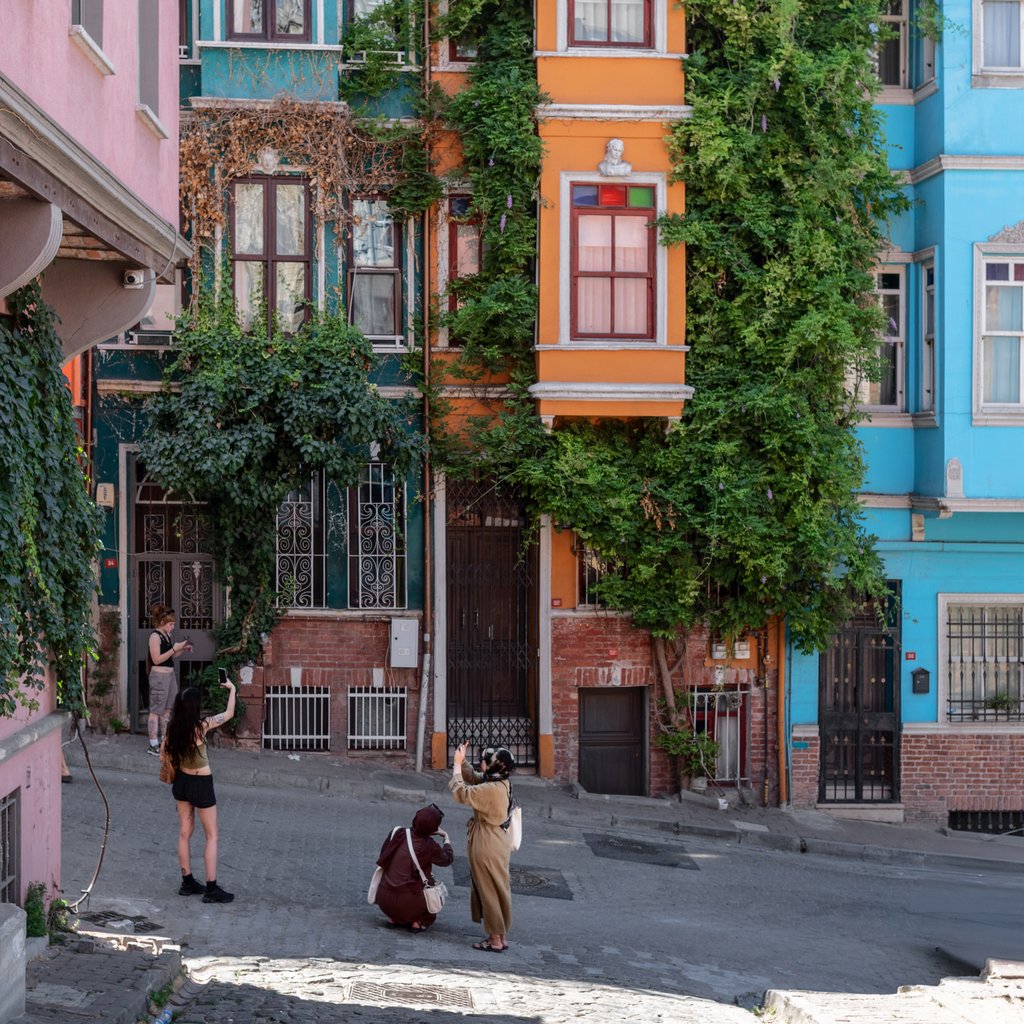
The local population has not always felt so helpless. Back in 2006, as the European Commission's programme was in full swing, Fatih Municipality launched the Fener-Balat-Ayvansaray Renewal Project, which envisaged demolishing 3,000 buildings. Outraged, locals turned out in force to oppose the plans in cooperation with groups like the Association of Preserving Fener Balat Cultural Heritage (FEBAYDER).
“We came together to oppose this project. One day, everyone who supported our struggle hung a poster on their windows saying: ‘Don’t touch my house’,” said Dr Çiğdem Şahin, once the spokesperson of Febayder and now assistant professor at İstanbul University’s Faculty of Economics. Şahin smiles as she gives an emotional retelling of the association’s and the locals’ victory. “We knew we were strong and that we had the support of the neighbourhood. So we faced the municipality and started a legal action to stop the project.”
Although it was a drawn-out process, Febayder and its allies defeated the renewal project in 2013. Their relief, however, was short-lived. Despite the victory, the neighbourhood eventually succumbed to change. “Balat was open to investments, and investors came. This is neoliberalism. We can't do anything about it,” said Dr Şahin, going on to describe how Balat has transformed over the years. “There are too many tourists. [Balat] is too chaotic, too crowded and has become more and more expensive. I have a very beautiful terrace, but the smell of kebab and the smoke from the restaurants below is too much to take. I can’t sit there as I used to. The clients are often noisy too. They don’t care about us living here.”
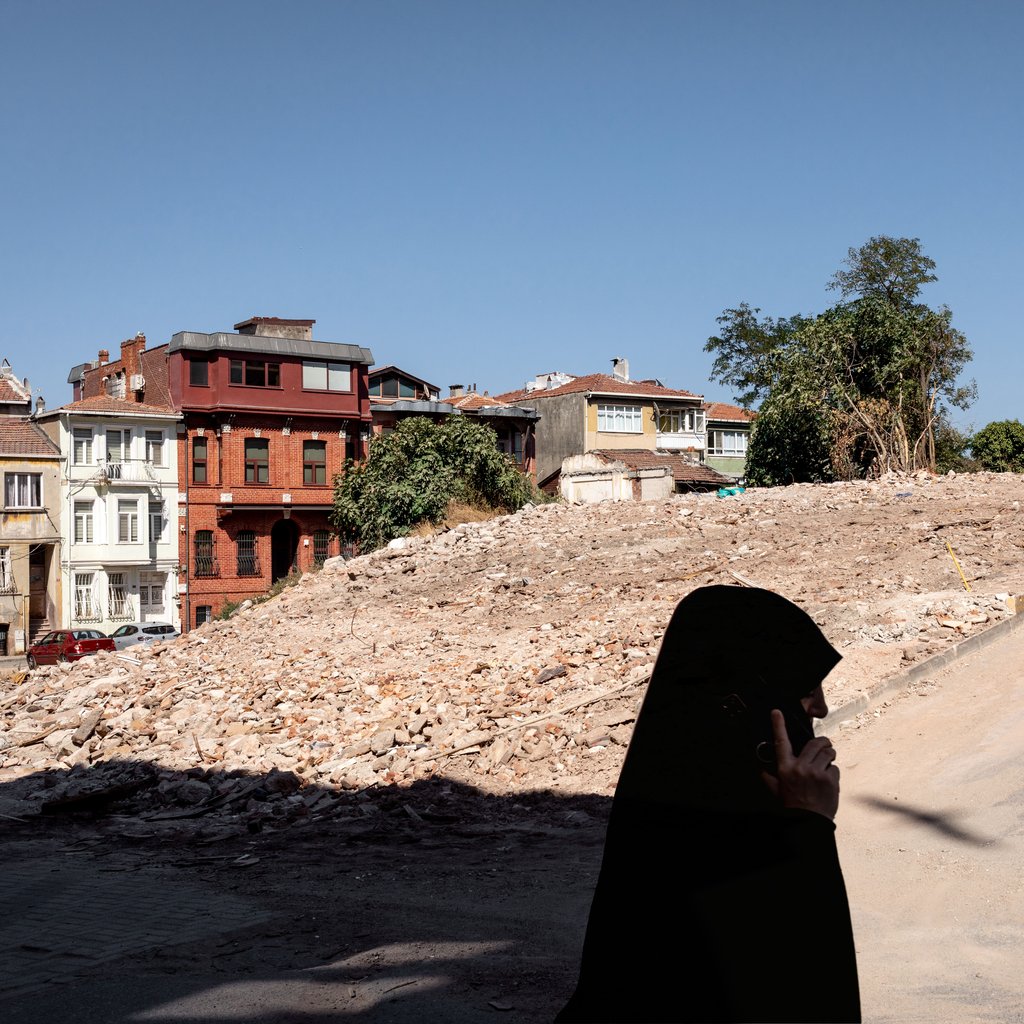
Fatih Municipality is still demolishing older buildings in Balat and constructing new ones — sometimes over the owners' objections. In July, the municipality ordered the demolition of Yahya Uzun’s home, a local contractor and businessman. He was the only owner in the building to oppose the project and refused to sell his property. It was demolished anyway. His lawsuit against the municipality is ongoing.
“All my stuff was still in the house when it was demolished. I lost so many memories. If I were alone now, I would cry,” he told us as he looked upon the rubble of his former home for the first time since its destruction.
Uzun, a tall man with broad shoulders, told us that the other owners decided right away to accept the municipality's offer, fearing that the next proposal would be lower or that the municipality would simply demolish the property anyway, as it did. “We lost our community, we don’t know each other anymore as we used to. That’s also why I am facing this situation alone.”
Uzun has moved with his wife to a new house, but he has decided to fight against the municipality by buying plots of land on the site of two of its proposed construction projects. His aim is to challenge their right to take what belongs to him, even if it costs him money. For Uzun, leaving Balat and finding peace elsewhere in the city is not an option: “I was born and raised here and I want to live here because it’s where I belong. Even if I don’t like how it is changing.”
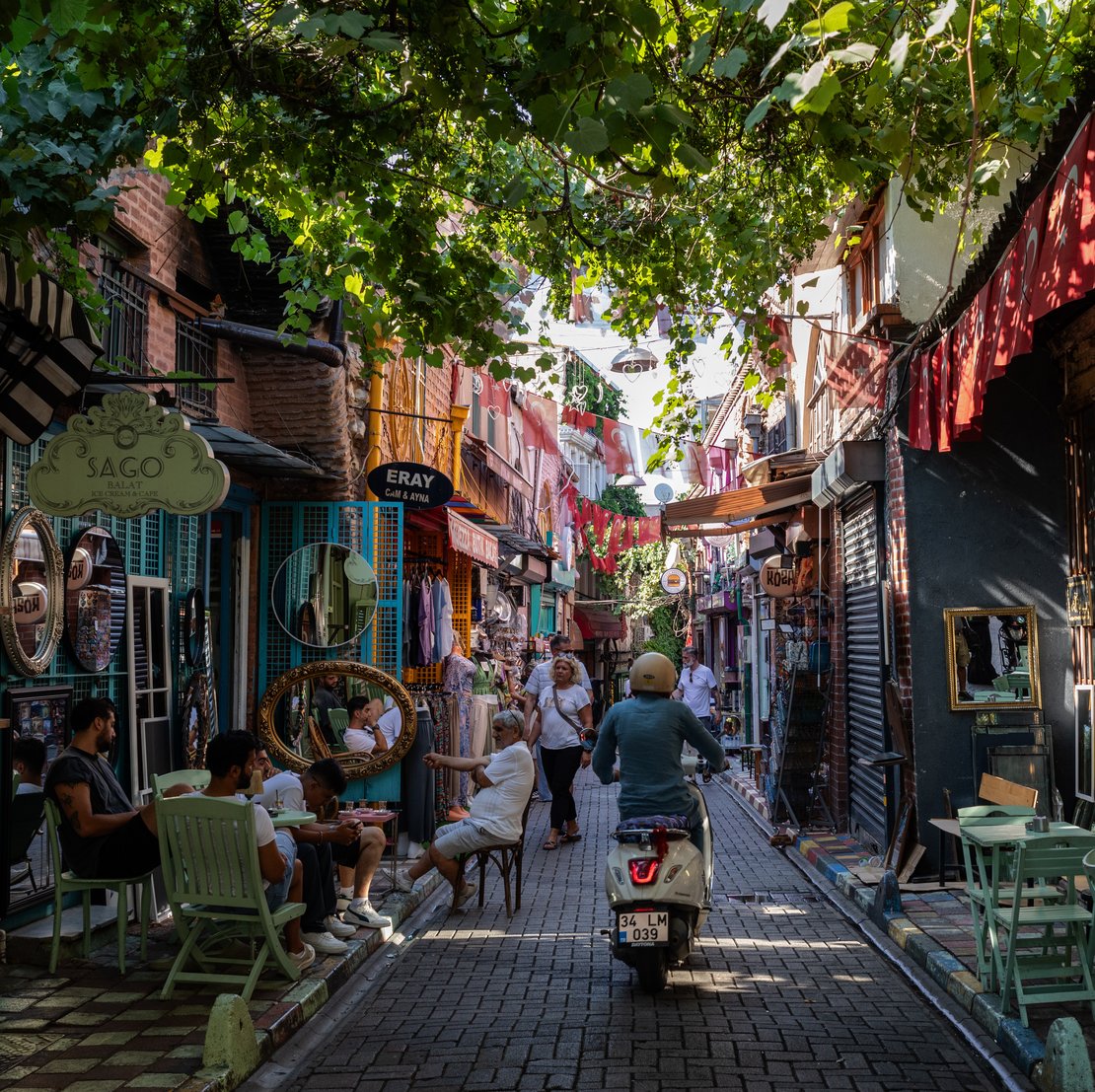
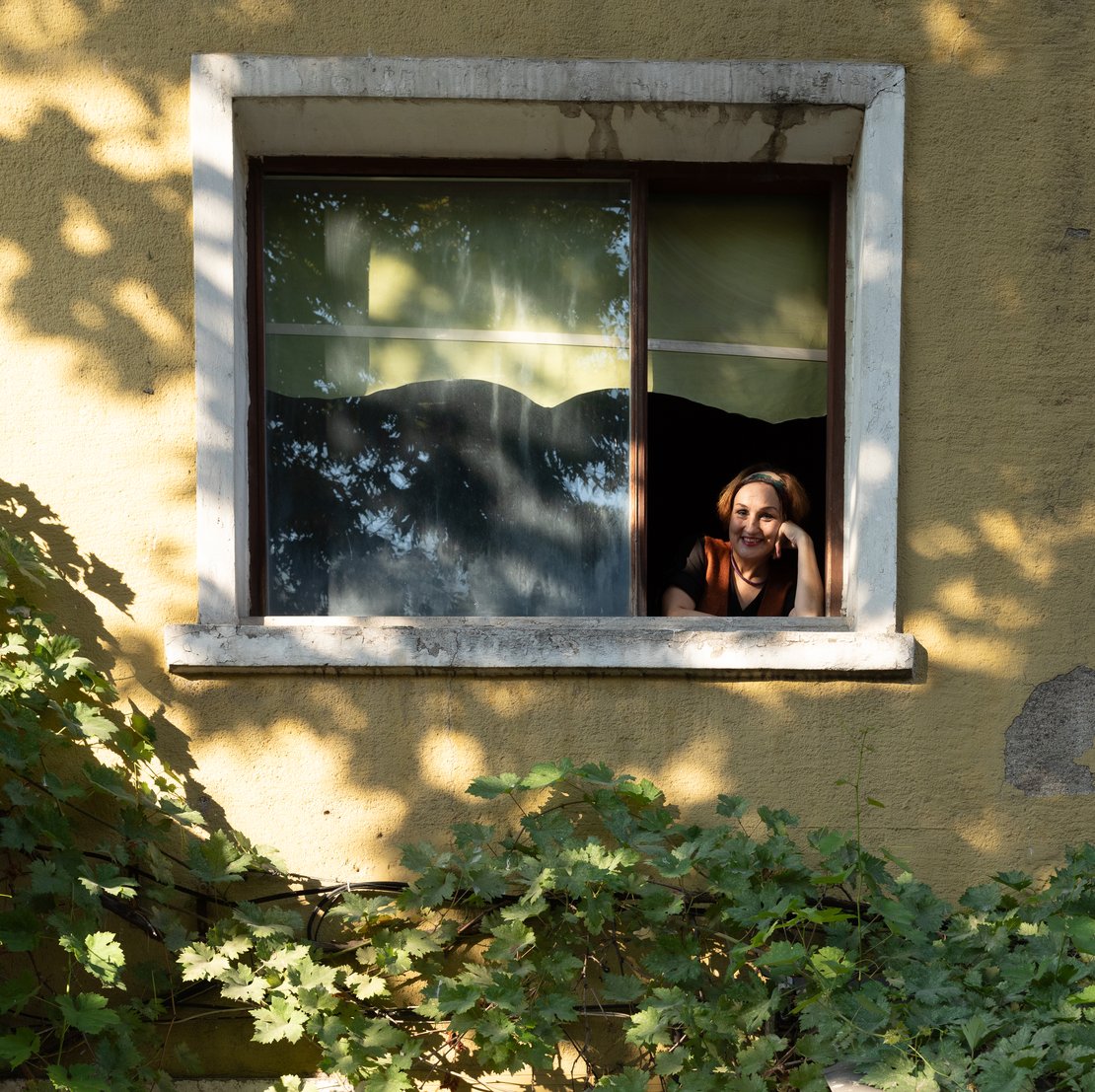
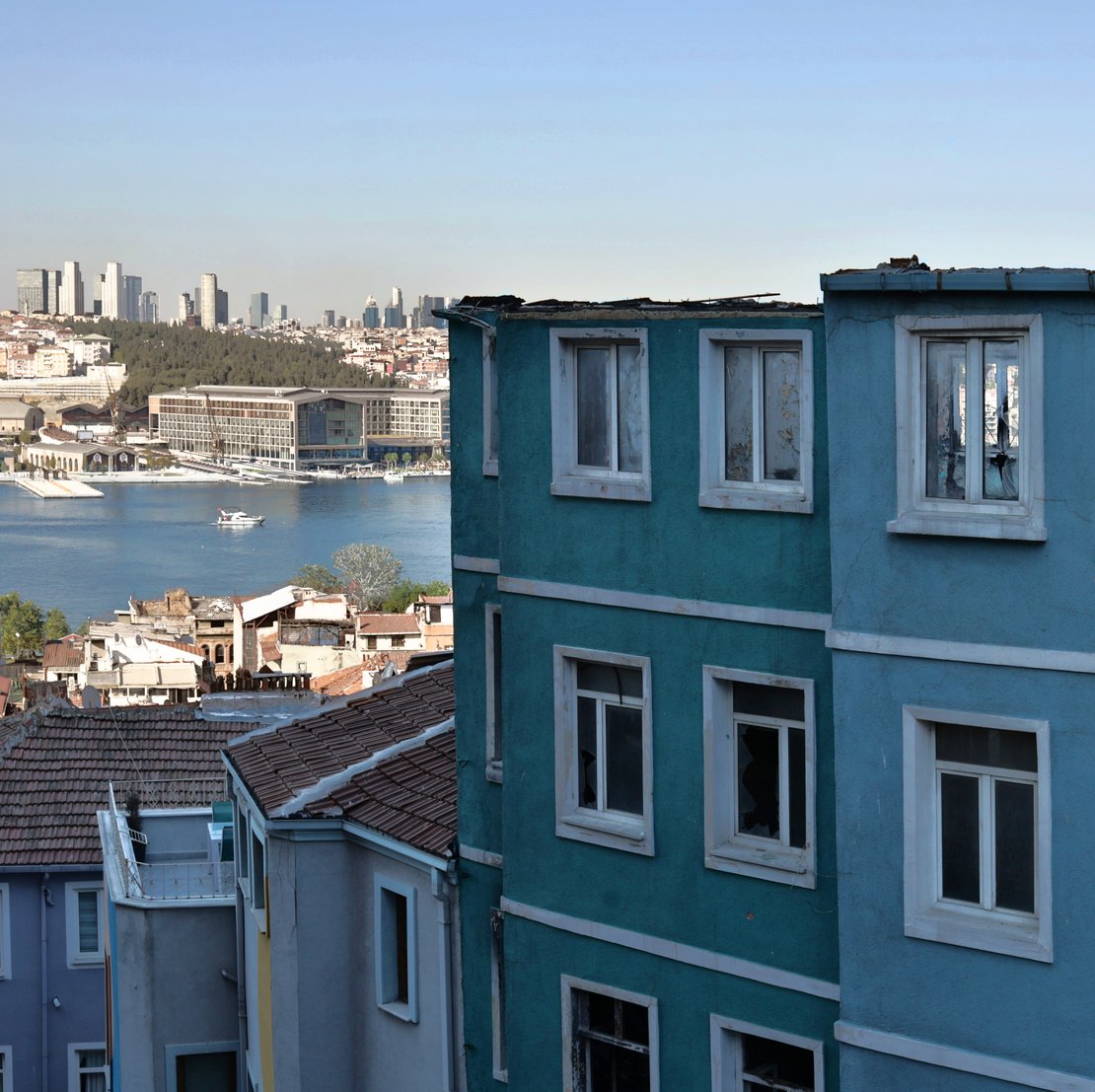
When night approaches, the streets of Balat become quiet. The area is mostly alcohol-free, so tourists look to other places to enjoy İstanbul’s nightlife. Local people regain their spaces. Children play freely in the side streets, without concern of being lost in the crowds. A handful of people are still chatting in a café, but the music has finally stopped. The cranes are motionless over the construction sites. The only shops open are the minimarkets. At this hour, in the dim light of the evening, Balat looks more like the neighbourhood of old, if only for a few hours until the next wave of tourists arrives in the morning.
Supported by Journalismfund Europe