They chose the venue for one reason: it has a pole – only to discover during rehearsals that it refuses to spin. After a frantic round of troubleshooting and copious amounts of WD-40, the metal finally turns. The night can commence.
As evening approaches, a dozen dancers cram into a tiny dressing room, adding final touches to their costumes, slipping into eight-inch heels, and performing some last stretches before the show begins.
By day, they are engineers, accountants, journalists. But on this Halloween night, each has a stage persona, a song, and a three-minute pole routine, performed in front of hundreds of friends, family, strangers, in a small Istanbul nightclub where nerves are running high.
As the guests gather outside, Esin*, dressed in thigh-high red pleasers, a crystal-studded body suit, and a witch’s hat, tries the pole one last time. She climbs to the top of the pole and performs a magnificent high spin before dropping to the floor and striking a pose for the camera.
“Pole dancing to me is about expressing myself, my most natural body, my sexiness and femininity without any hesitation,” she says. “And yes, I do this in Turkey. It’s hard. But I never cared about what others think.”
The red lights are on and the smoke fills the stage. One after the other, the dancers carry out fantastic jumps, turns, spins, splits to the loud cheers and screams of the crowd. There are men among them, but they hold no relevance here. It is the women’s praise that matters. And the more daring or risqué the move, the louder they whoop.
Anywhere in the West, this might be an ordinary Friday night. In today’s Istanbul, it feels revolutionary. “This is surreal,” a woman in the audience says, laughing.

Photos: Üzüm Derin Solak

Photos: Üzüm Derin Solak

Photos: Üzüm Derin Solak

Photos: Üzüm Derin Solak

Photos: Üzüm Derin Solak
❦
Once regarded as the capital of ‘new cool’ in Europe, Istanbul has now become as much about the rights violations under President Recep Tayyip Erdoğan’s Islamist coalition with conservative nationalists.
In the last decade, the government has become increasingly critical of the West and the values it represents, issuing blanket bans on public protests, withdrawing from the Istanbul Convention designed to protect women's safety, demonising the LGBTQ+ community, and jailing hundreds of critics from all walks of life.
During a Women’s Day speech last year, President Erdoğan stated that any view that “detach[ed] women from the family” was dangerous. “These [feminist organisations] have declared war against the family in the name of modernisation and Westernisation.” He declared 2025 the “year of the family.”
Against this political backdrop, a group of women in Istanbul chose pole dancing to embrace their femininity, defy cultural codes, and reclaim their strength in life and in society. Among them are non-binary individuals, for whom ‘pole’ is also a valuable platform to express their identity. Together, they all say they found a shared sense of solidarity in pushing back against societal and political pressures.
“If I’m stuck at the top of the pole, for example, or I’m slipping, another girl will literally lift me up,” says Berfin, 28, a sociologist. “They save me from falling. That physicality strengthens our bond.” Her bit tonight is a mix of whimsy and darkness. She twists her strong legs around the pole to Gin Wigmore’s Kill of the Night, with the lyrics, “The danger is I'm dangerous/And I might just tear you apart.”
She tosses her flowery pink satin gown, and fake blood starts trickling down from her mouth. When her routine ends, she runs to hug her fellow dancers, a beaming, almost childlike grin on her face.
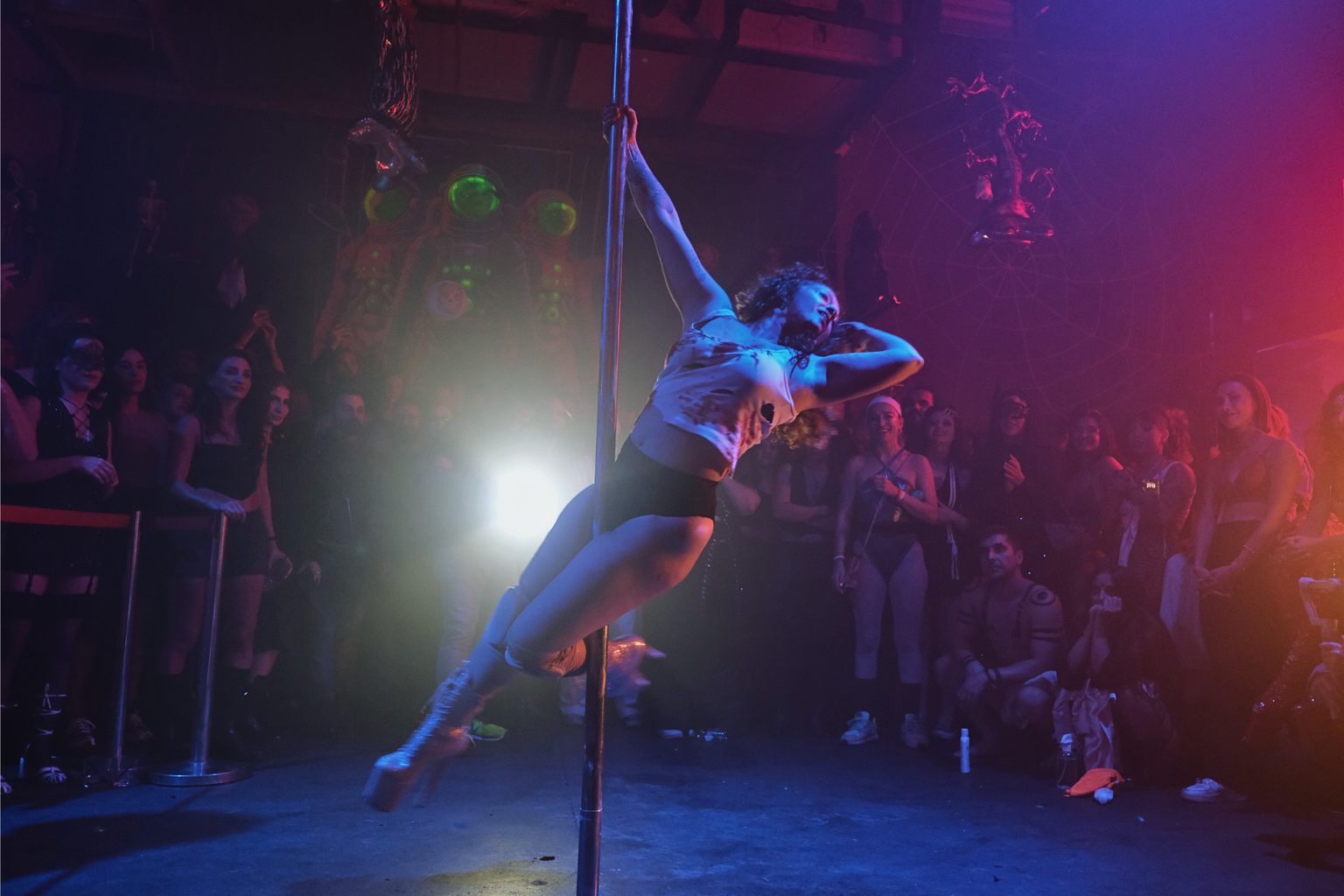
Photo: Üzüm Derin Solak
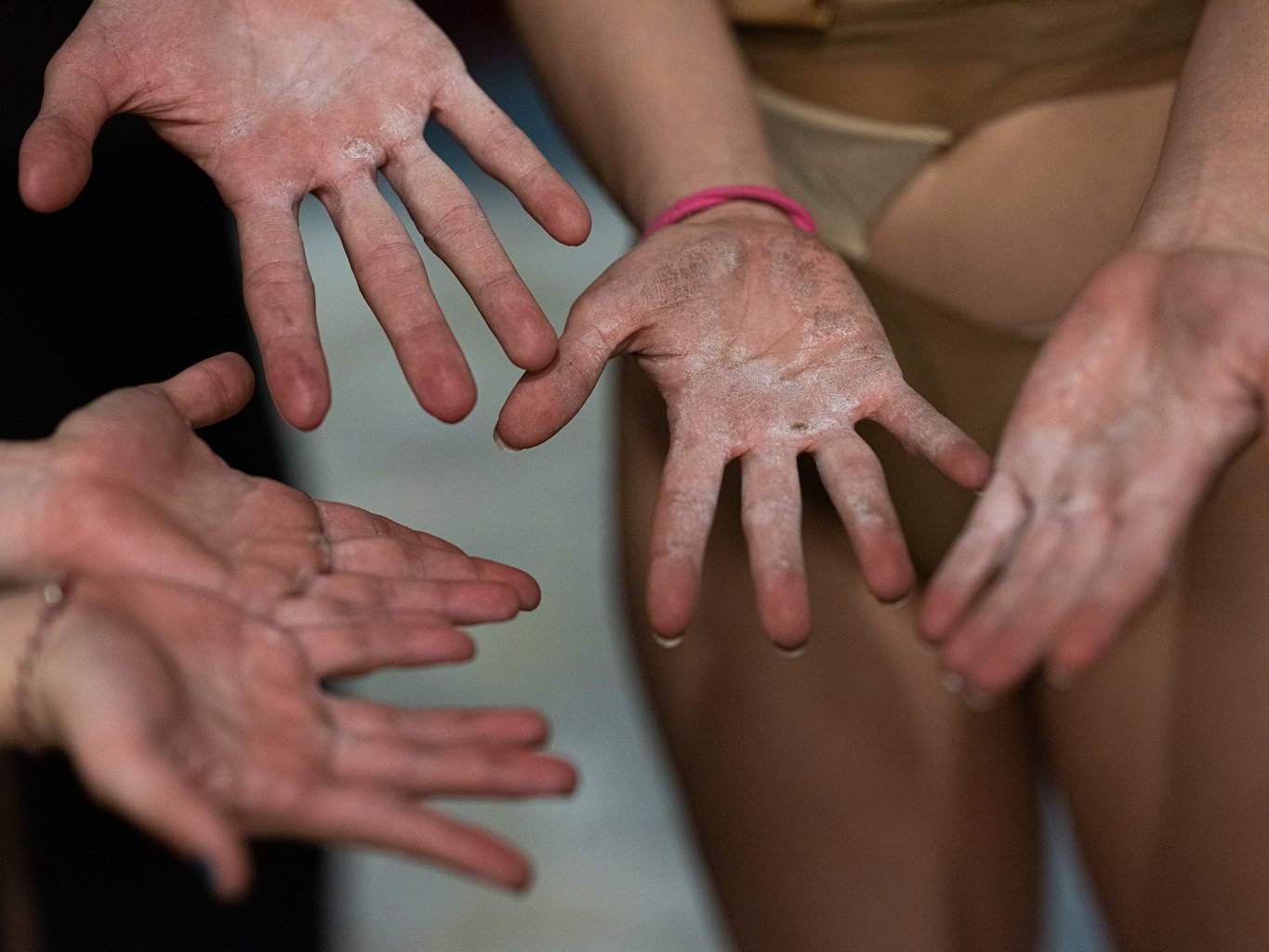
Photo: Özge Sebzeci
“In Turkey, appearing in a short skirt in public transportation, wearing less, or simply doing something for yourself as a woman is part of the feminist uprising,” Berfin says. “Female bodies coming together in the public sphere, at peace with their appearances, creating unity is an uprising in its own right.”
Some routines are slow and graceful, some high tempo and erotic. But each of the girls is strong, their muscles hardened after years of training, sometimes up to five sessions a week. Many of them are pranged with small bruises they proudly call “pole kisses” — purple reminders of the work they put in.
When the show ends, they all pull each other in for long hugs, relieved that after weeks of preparation, they can enjoy their moment. They clear the stage and spill out into the terrace, drinks in hand. The music kicks back on. The guests cannot resist climbing onto the pole themselves and trying a few spins.
❦
"THIS IS OUR SAFE PLACE, NO MATTER WHO WE ARE"
Pole dancing has no tradition in Turkey. It gained popularity after it was picked up by pilates studios and gyms around 2017, says 41-year-old Özge Uraz, a senior trainer at Pole‘n Roll studio in Kadıköy. Since then, it has grown in popularity. But not everyone views the pole the same way.
Some studios are at peace with its roots in striptease and embrace what they call “exotic pole.” Others are less comfortable and even forbid thongs, hoping to rebrand it as pole fitness, a sport elevated above its sexier cousin.
The policing of costumes and prohibitions on ‘excessive’ flesh in competitions prompted two dancers in Australia to launch the ‘Pole Theatre’ concept in 2013, which quickly spread to the US under shows like ‘Pole Show LA,’ and in fringe festivals in the UK, Germany, France, and Russia, where the dancing tradition had always been strong, Uraz explains. It is their attempt to celebrate creative performances over rules. Anything should be possible, and the point is to entertain.


Photos: Özge Sebzeci
It is May, and the Pole’n Roll studio is about to put on its own theatre event. A very different kind of performance from their raucous Halloween-themed one six months ago, they aspire to put on a show in the spirit of their global peers, combining traditional theatre, storytelling, and dance.
For Uraz, this is a dream come true. “When I started pole dancing in 2013, there was only one Russian dancer offering lessons at her home, in downtown Istanbul,” says Uraz.
“It used to be hush-hush,” she adds. “Lessons were women-only, and none of our families knew. Fast forward to today, we’re getting ready to perform in front of an audience. Who would have thought?”
We enter a tiny performance hall in the basement of an ageing shopping arcade. To descend from the upper levels, with their drab military surplus and stationary stores, into the subterranean theatre feels like falling through a rabbit hole into a wonderland.
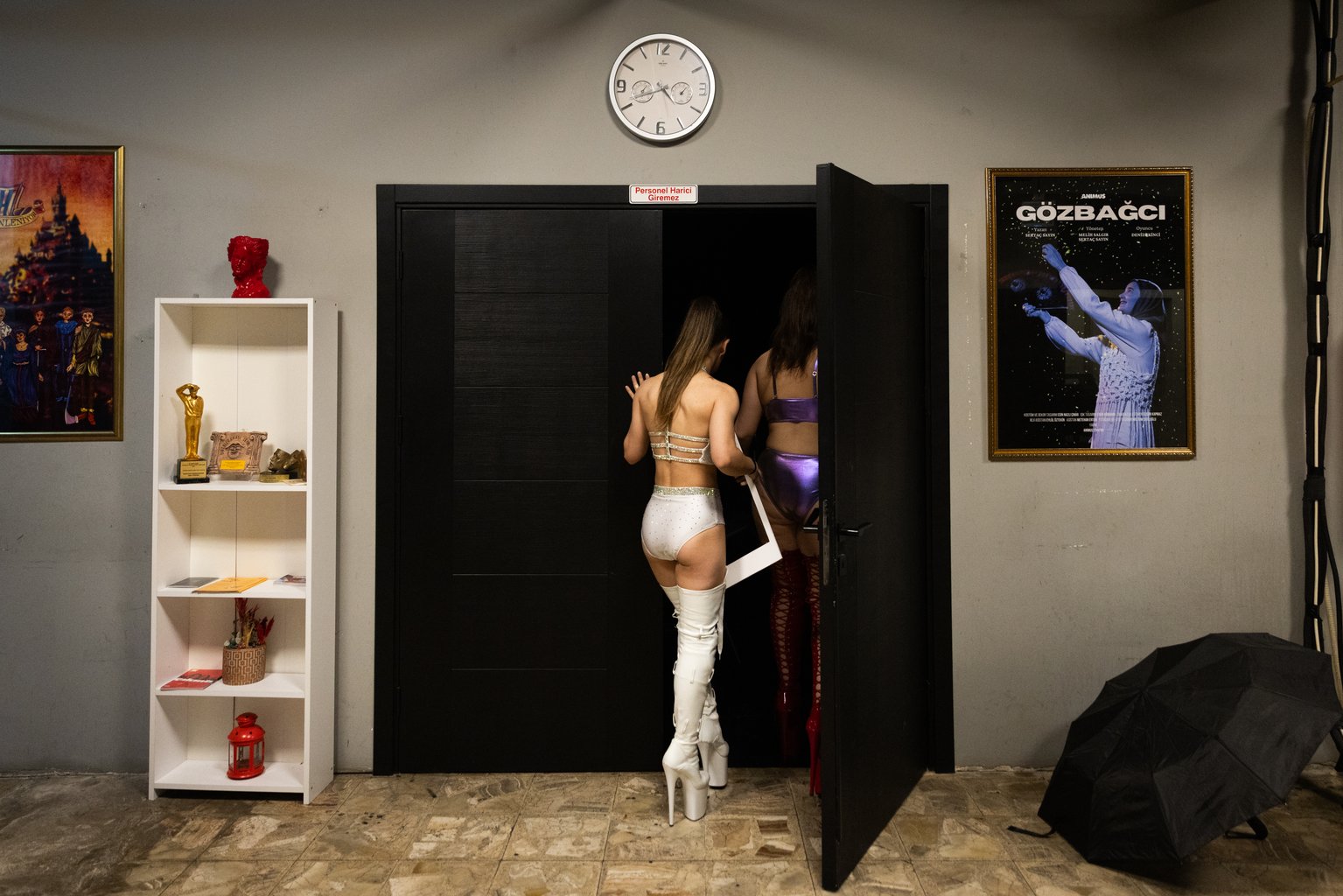
Photo: Özge Sebzeci
“Here is our safe place, no matter who we are,” Gizem says, dressed in her homemade skin-coloured costume designed to give the impression of nakedness. “I do this for myself. I love testing my limits and don’t care how others judge me because there is no judgment here.”
Gizem started poling after her divorce two years ago. When her male colleagues heard about it, she became the subject of gossip. Her female supervisor was much more direct, however.
“Only strippers and porn stars do pole dancing,” the female boss told her. Gizem no longer works at that company, but the episode left her in doubt as to the risks posed by the conservative government and its allies in society, regardless of where she works.
“Because they have not spotted us on their radar yet, there is no imminent threat. But there may be in the future,” she says, shrugging. “We may represent only a tiny part of society for now, but soon I believe the young will transform the country.”


Photos: Özge Sebzeci
A powerful resistance
Melek, 40, is the petite yet strong senior trainer and owner of Pole‘n Roll, where the girls train. She worked as an engineer on male-dominated construction sites for years, where she suffered sexual discrimination and sometimes mobbing, before she finally called it quits.
“I was thinking of changing companies, but then I found pole dancing and loved it. I wanted to do it for work,” she says, rubbing her muscular shoulders. It was a hard five years trying to establish herself, she adds.
“When I first started, they would ask whether I was an escort girl and how much I charged, so I rarely told anyone I was doing pole dancing,” she says. “Visiting my family in Niğde, which is a conservative Anatolian town, I would cover my tattoos, let alone tell anyone about pole dancing.” She never told her father, even after he was diagnosed with cancer. Even now, it remains an unspoken reality in the family.
Back in Istanbul, though, people are adjusting. “Today, there is no more ‘escort’ talk, and instead, there is appreciation for the strength and discipline put into it,” she says. Now there are more than a dozen studios all over Istanbul.
İlknur Hacısoftaoğlu, a sociologist and assistant professor at Istanbul’s Bilgi University, says that no matter how forceful government policies are, society often moves in its own direction, creating space for gender equality and individuals to freely express themselves.
“Sociologically speaking, politics fails in controlling changes in society,” Hacısoftaoğlu says. “Turkey’s feminist movement has grown stronger since the 1980s, focusing on physical empowerment and rejecting pressure, which overlaps with today’s pole dancing community.”
Social progress never works in reverse, Hacısoftaoğlu reassures. “Nowhere in the world do oppressed people give up easily once they gain their rights, and women in Turkey have been fighting for their rights for a long time,” she says. “Conservative rhetoric is not as widespread as expected and cannot roll back the rights gained over the past 40 years.”


Photos: Özge Sebzeci
Will the show go on?
On the warm May evening in Istanbul’s popular Kadıköy district, people are lined up quietly, leading down the stairs of the arcade. There were no posters or signs indicating the pole show. One security personnel behind a tiny counter knew there was an event downstairs and directed some confused invitees in the right direction.
The show begins with eight dancers sitting on the floor and bathed in green light as birds tweet and the opening piano chords of John Lennon’s “Imagine” ring out. The stage depicts the heavens, with colourful ribbons attached to the poles. The bare-footed dancers all wear flower tiaras and take turns on two silver poles, striking cheerful poses, to be gradually pushed aside by warriors ripping apart their peaceful world. The music turns sinister.
Social media is the theme of the next act. Art directors aim to show how we have become slaves to our visual selves, one of the things pole aims to liberate us from. Then, such individualism is tied with the sense of community and togetherness, again a common theme in Turkey’s close-knit pole community. The final scene is about re-inventing our very existence, as the dancers move their bodies closer and closer, symbolically ridding themselves of names, titles, borders, and moving as one. The show reflects this young community’s yearning for a new future, one that is starkly different from what they will experience once they leave the theatre.

Photos: Özge Sebzeci

Photos: Özge Sebzeci

Photos: Özge Sebzeci

Photos: Özge Sebzeci

Photos: Özge Sebzeci

Photos: Özge Sebzeci

Photos: Özge Sebzeci

Photos: Özge Sebzeci

Photos: Özge Sebzeci
A mother in the audience, Arzu, 57, is holding a colourful bouquet to give to her daughter. She is happy to see her accomplish things that she herself had not. “My husband is also conservative, but we support our daughter in her choices,” she says. “She is an activist by nature. We also had our share of the police’s pepper spray together, and this space here represents freedoms that she believes in.”
“None of the criticism interests me, and I will keep supporting my daughter despite it all,” Sıdıka, 74, a retired teacher, says. She is proud that her daughter, Burçak, is among the performers this night. “Especially because art is the main force in destroying anything evil.”
Among the audience is Suzan, a 45-year-old brunette with a bright face, who started pole dancing in her 30s. “‘Come to your senses. You’re a mother, you have a child,’” she says her husband had told her when she started. It is an order she flatly defied.
“There is a sense of injustice that hurts men and women, or animals, in this country,” she says. “Once you make a move against it, you create a safe space filled with mothers, fathers, and people from all walks of life, which is beautiful.”
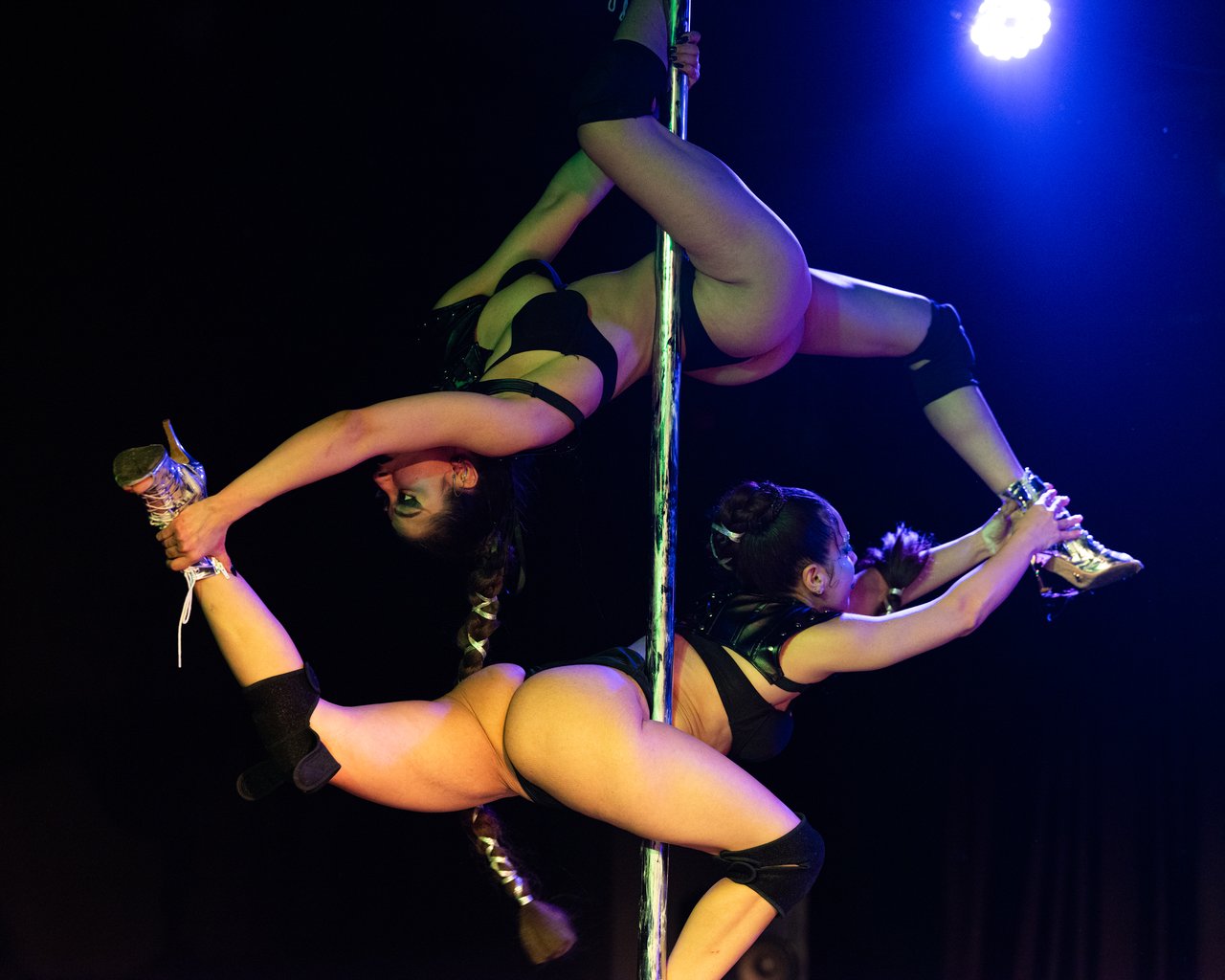
Photo: Özge Sebzeci
Whatever the outcome of the country’s next presidential election in 2027, its aftermath is likely to see stronger right-wing policies gaining traction in the conservative environment shaped by Turkey’s political Islamists.
“People have been aware of interference into our lives for years now,” Suzan says. “Isn’t Turkey a country of contradictions after all? We will never be short of interference but will always find a way to survive.”
The pole theatre wraps and 30 dancers spill out into the busy Istanbul streets, loud and buzzing with adrenaline, glitter still on their faces, miniskirts covering leather harnesses, ready to continue the celebrations. No one bats an eye.
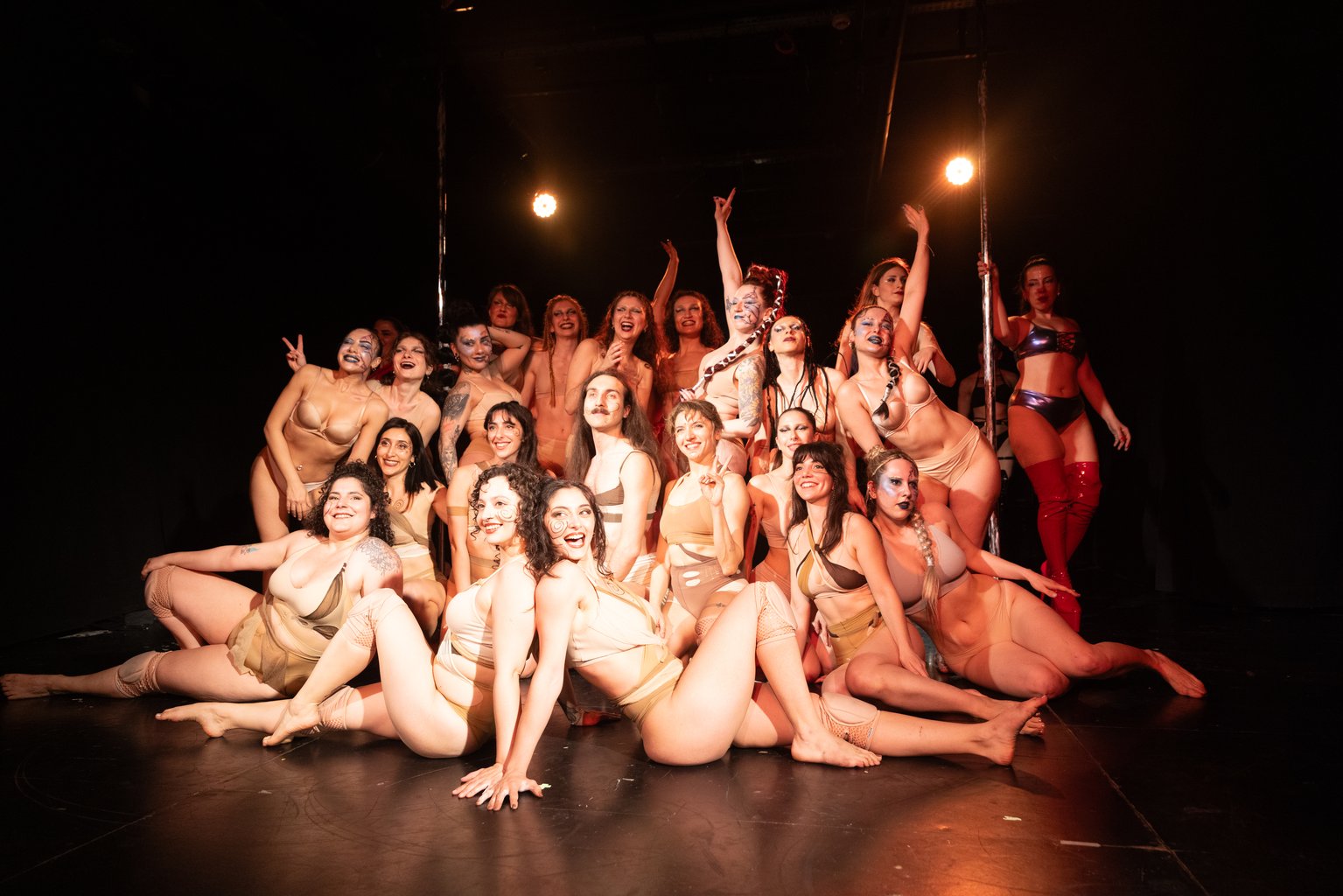
Photo: Özge Sebzeci
Pole theatre photos by Özge Sebzeci
Halloween show photos and videos by Üzüm Derin Solak
Additional reporting and editing by Craig Shaw